
Table of contents
- What Is Dizziness?
- Understanding Vertigo and Vestibular Dysfunction
- Understanding BPPV, Vestibular Migraines and PPPD
- Common Dizziness Symptoms and How They Affect Daily Life
- What Causes Dizziness and Balance Problems?
- Dizziness Red Flags: When to Go to Urgent Care or the ER
- How We Evaluate Vertigo, Dizziness, and Balance Issues
- Your Personalized Vestibular Therapy Treatment Plan
- What the Research Says About Vestibular Rehabilitation
- Vestibular Therapy Case Example: From Daily Dizziness to Better Function
- What to Expect at Omega Functional Health
- Download Our Guide: Recalibrating Your Brain’s Relationship with Gravity
- Watch Our Explainer Video: Why You Feel Dizzy and What Helps
- FAQs
- Medical References
- Meet The Team
- Reviews
Last reviewed: February 11, 2026Reviewed by: Dr. Sam McDonald and Dr. Lynn Tran

What Is Dizziness?
Dizziness is a symptom, not a diagnosis. It can feel like lightheadedness, imbalance, faintness, brain fog, or a spinning sensation called vertigo.
Common Causes of Dizziness
Common causes of dizziness include inner ear and balance issues, vestibular problems, migraines, dehydration, blood pressure changes, medication side effects, and changes in how the brain processes movement and position.
First-line care
Dizziness treatment starts with finding the cause. At Omega Functional Health in Wheat Ridge, first-line care may include a focused evaluation, vestibular rehabilitation strategies, and personalized care to improve balance, stability, and symptom control.
Urgent red flags
Seek urgent medical care if dizziness happens with chest pain, fainting, severe headache, weakness, numbness, slurred speech, double vision, trouble walking, or sudden hearing changes.

Understanding Vertigo and Vestibular Dysfunction
Your vestibular system is a sensitive, fundamental system of your body. It is made up of two different balance organs in the inner ear, the Semicircular Canals responsible for rotational head movement and the Otolith organs, responsible for linear movement, like driving forward or backward in a car or riding up and down in an elevator, and perception to the every present force of Gravity. The vestibular system is deeply connected to your Visual system, mainly your eye movement reflexes; your Somatosensory system, body-position input from muscles and joints and your Cerebellar connection pathways.
Most people experience persistent dizziness, spinning, rocking, lightheadedness, blurred vision, or unsteadiness due to a lack of integration between the “Big 3”: The Vestibular system, The Visual system and The Somatosensory system. All three of these systems must be in perfect harmony at all times in order for you to know where you are in your environment and where the environment is in relation to you. (PubMed)
Two important myths to clear up:
Myth: “All dizziness is the same.”
Reality: Different dizziness diagnoses need different treatment applications.
Myth: “I should just rest until it goes away.”
Reality: For many vestibular disorders, targeted rehab outperforms prolonged inactivity.

Understanding BPPV, Vestibular Migraines and PPPD
Benign paroxysmal positional vertigo or BPPV is one common cause of brief, position-triggered vertigo (like rolling in bed or looking up). It is caused when too many small crystals called Otoconia, located above the Otolith, fall into the semicircular canals of the inner ear. When you rise the crystals don’t fall out they fall in and become trapped in the canal bending the hair cells inside the Canal causing an intense spinning and dysequilibrium.
Vestibular Migraines are a type of Migraine characterized by feelings of spinning or the room spinning making you feel like you are on a merry go round or on a boat. Other common complaints are bright lights, loud noises, issues with crowded places and some experience with flashing lights or blinds spots, called an aura.
The biggest differences between BPPV and Vestibular Migraines are that BPPV often comes in short intense bursts, lasting seconds to a minute, and are dependent upon head position while Vestibular Migraines can last minutes to hours and can be triggered without moving your head. (PubMed)
Persistent postural-perceptual dizziness (PPPD). PPPD is a recognized diagnosis with specific criteria, including persistent dizziness/unsteadiness that worsens with upright posture, movement, and visually complex environments. (PubMed)

Common Dizziness Symptoms and How They Affect Daily Life
Common symptoms include:
- Vertigo (spinning sensation)
- Rocking/swaying or “off-balance” feeling, like being on a boat
- Nausea and motion sensitivity
- Blurry vision with head turns
- Unsteady walking or fear of falling
- “Brain fog,” fatigue, and overwhelm in busy environments
Common aggravators:
- Rolling in bed, bending, quick head turns
- Crowded aisles, scrolling screens, visually busy spaces
- Driving, multitasking, and rapid position changes
Common easing patterns:
- Correct diagnosis and targeted treatment
- Gradual exposure (instead of complete avoidance)
- Structured home exercises
Impact often shows up as reduced work productivity, lower exercise tolerance, less driving confidence, chronic pain, migraines/headaches, nausea, sleep disruption, and social withdrawal.

What Causes Dizziness and Balance Problems?
Dizziness usually has more than one contributor. Common drivers include:
- Vestibular drivers: Unilateral/Bilateral vestibular miscalibration, BPPV, post-viral vestibular changes
- Visual-vestibular mismatch: sensitivity to motion, screens, and crowded visual scenes
- Proprioception mismatch: The brain needs an accurate representation of where the body is before it can judge proper distance of objects or people outside the body. When there is a mismatch, symptoms can be the result.
- Neurologic contributors: migraine-related vestibular symptoms, post-concussion effects
- Behavioral/lifestyle contributors: sleep disruption, stress load, reduced activity, under-recovery
A common cycle is: symptoms → avoidance → reduced tolerance/capacity → more symptoms. Treatment works best when we break that cycle with precise diagnosis, brain specific exercises, and measurable progression.

Dizziness Red Flags: When to Go to Urgent Care or the ER
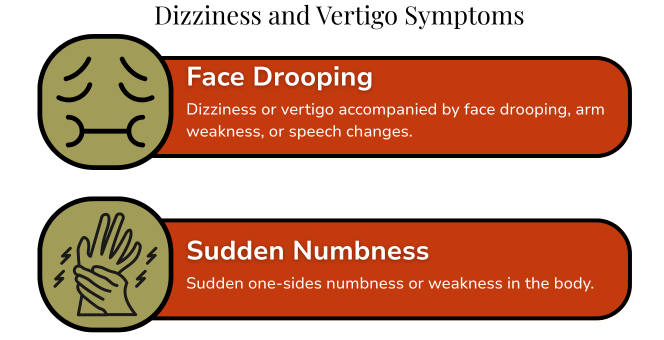
Seek emergency care immediately if dizziness or vertigo comes with:
- Face drooping, arm weakness, or speech changes
- Sudden one-sided numbness/weakness
- Sudden severe headache with no clear cause
- Sudden vision loss or double vision
- New severe coordination loss, collapse, or inability to walk
- Fainting, chest pain, or shortness of breath
These can signal serious medical conditions, including stroke. Call 911. (CDC)
For non-emergency but concerning presentations (progressive asymmetric hearing loss, nonauditory neurologic deficits, high cerebrovascular risk), advanced medical evaluation and imaging may be indicated. (Johns Hopkins Medicine)


How We Evaluate Vertigo, Dizziness, and Balance Issues
At Omega Functional Health, your assessment is built to identify the most likely diagnosis first, then match care to that diagnosis.
Your evaluation includes:
- Detailed history: onset, triggers, duration, pattern, fall risk, migraine/concussion history, medications
- Vestibular and oculomotor testing: Videonystagmography (VNG), Posturography
- Gaze Stability, Optokinetic and Vestibulo-Occular (VOR) Testing
- Positional testing when BPPV is suspected
- Balance and gait testing for real-world function
- Differential diagnosis to distinguish peripheral vestibular, central, migraine, PPPD, and mixed presentations
Imaging is not automatically required for every dizziness case. For many classic peripheral patterns, clinical exam guides first-line care. Imaging is prioritized when red flags or atypical neurologic features are present. (Johns Hopkins Medicine)

Your Personalized Vestibular Therapy Treatment Plan
Phase 1: Calm Symptoms and Improve Safety
- Confirm likely diagnosis and immediate priorities
- Reduce symptoms with targeted Brain Specific Exercises
- Provide fall-risk and daily-safety strategies
- Begin low-dose symptom-calibrated home exercises
- Use canal repositioning when BPPV is present
Phase 2: Restore Motion Tolerance
- Gaze stabilization progression (VOR-focused)
- Habituation for motion/visual sensitivity triggers
- Positional transition retraining (flexing, extending, bending, turning)
- Early walking/head-turn integration
Phase 3: Rebuild Balance and Functional Capacity
- Dynamic balance and gait progression
- Dual-task drills (movement + cognitive demand)
- Endurance and confidence rebuilding
- Work, parenting, and activity-specific loading
Phase 4: Return to Work, Exercise, and Daily Life
- Gradual return to driving, gym, hiking, and busy environments
- Flare-response plan for setbacks
- Maintenance home program and progress checkpoints
When Adjunct Therapies May Be Used
Vestibular rehabilitation remains the core treatment for vestibular diagnoses. Adjunct options are considered only when your exam shows coexisting contributors that may benefit from supportive care. Not every modality is right for every patient, and no single tool treats all dizziness patterns


What the Research Says About Vestibular Rehabilitation
2022 Clinical Practice Guideline (JNPT/APTA): Strong recommendations support vestibular rehabilitation for peripheral vestibular hypofunction, with supervised care plus home exercise for best outcomes. Applies to: peripheral vestibular hypofunction. (PubMed)
BPPV Guideline Update (AAO-HNSF): Emphasizes accurate diagnosis and repositioning maneuvers, while reducing unnecessary vestibular suppressants and inappropriate imaging. Applies to: suspected BPPV. Limitation: focused on BPPV, not all vestibular disorders. (aao-hnsfjournals.onlinelibrary.wiley.com)
Cochrane Review (unilateral peripheral vestibular dysfunction): Reports moderate-to-strong evidence that vestibular rehab is safe/effective; for BPPV specifically, repositioning maneuvers may be superior short-term. Applies to: unilateral peripheral cases. Limitation: heterogeneity across protocols. (Cochrane Library)
PPPD Consensus Criteria (Bárány Society): Defines chronic non-spinning dizziness/unsteadiness patterns worsened by posture, motion, and visual complexity. Applies to: persistent dizziness presentations. Limitation: diagnostic criteria guide classification; treatment must still be individualized. (PubMed)
Concussion-related dizziness evidence: Systematic reviews suggest vestibular rehab can improve dizziness and function after concussion, though study designs and dosage protocols vary. Applies to: post-concussion vestibular symptoms. Limitation: evidence quality and protocols are mixed. (PubMed)

Vestibular Therapy Case Example: From Daily Dizziness to Better Function
A 22-year-old Female presented with 18 years of dizziness, motion sensitivity, and Migraines. Symptoms were triggered by quick head turns, rising up from a supine position, crowded environments, and screen-heavy workdays.
Baseline limitations
- Needed frequent breaks at work
- Reported anxiety about symptom flare-ups in public spaces
- Chronic Pain in Jaw, head, neck and shoulders
Assessment highlights
- Positional testing negative for active BPPV at intake
- Reduced gaze stabilization tolerance. Looking to the right was worse than the left
- Eye drift during a darkness test with excessive blinking
- Intention tremors in both hands
- Balance deficits both on baseline testing and on perturbed surface
- No immediate neurologic red flags on exam
Plan duration
- 12 weeks of structured in-clinic progression plus home program
Interventions
- Visual, vestibular and proprioception retraining in office
- Brain specific exercises performed at home
- Myofascial release on musculoskeletal adhesions contributing to chronic pain
Milestones
- Week 2: fewer intense spikes during routine head turns, decrease in shoulder pain
- Week 4: Decrease in tremors, improvement in work tolerance, able to stand for greater than 6 hours each day. Pain reduced to 3/10
- Week 12: Positional dizziness reduced significantly, chronic pain 2/10, eliminated usage of pain medication.
Outcome focus
- Better day-to-day function, movement confidence, and symptom self-management
- Continued maintenance program to reduce recurrence risk
VNG Darkness test performed on initial intake

VNG Darkness test performed 12 weeks later

Vestibular Therapy: What to Expect at Omega Functional Health
Omega Functional Health serves Wheat Ridge and the greater Denver area from its clinic on W 44th Ave, with a care model centered on individualized planning and function-focused outcomes.
What your first visit includes
- Detailed history and focused exam
- Clear explanation of likely diagnosis and next steps
- Objective testing including: Videonystagmography (VNG), Posturography, Neurotiming assessment. A QEEG may also be performed depending on doctors discretion.
- Personalized treatment roadmap with measurable milestones
Who this care is for
- Adults with vertigo, chronic dizziness, imbalance, motion sensitivity, or post-concussion vestibular symptoms
- Children with dizziness, car/motion sickness problems or complaints of head and neck pain
- Patients looking for non-surgical, evidence-informed care with clear progression

Download Our Guide: Recalibrating Your Brain’s Relationship with Gravity
This guide explores how your vestibular, visual, and somatosensory systems work together to shape balance, posture, movement, and recovery. It explains Omega Functional Health’s brain-based approach to identifying weak links, reducing chronic fight-or-flight stress, and improving stability through advanced testing, customized exercises, and a clear step-by-step recovery framework.
Watch Now: What Is Dizziness and What Causes It?
In this 8-minute overview, we explain the most common causes of vertigo and dizziness, how we separate medical red flags from treatable vestibular patterns, and what a practical recovery roadmap looks like from day one to return-to-life goals.
FAQ
- Is vestibular therapy the same as the Epley maneuver?
- How long does vestibular therapy take?
- Can therapy make symptoms worse at first?
- Do I need an MRI before starting?
- Can vestibular therapy help after concussion?
- What if my dizziness has lasted for months?
- Is dizziness ever an emergency?
- Can stress and poor sleep make dizziness worse?
No. The Epley maneuver is one specific treatment for certain BPPV cases. Vestibular therapy is broader and may include gaze stabilization, habituation, and balance retraining. (aao-hnsfjournals.onlinelibrary.wiley.com)
It depends on diagnosis, symptom duration, and consistency with home exercises. Some people improve in a few weeks; others need a longer progression.
Mild temporary symptom provocation can happen during targeted rehab. Your program should be dosed to challenge your system without overwhelming it.
Not always. Many peripheral vestibular patterns are diagnosed clinically. Imaging is prioritized for red flags or atypical findings. (Johns Hopkins Medicine)
Evidence suggests it can improve dizziness and function in many post-concussion cases, though protocols vary. (PubMed)
Persistent symptoms can still improve when diagnosis and targeted strategies are precise. Chronic patterns like PPPD are recognized and treatable with structured care. (PubMed)
Yes. If symptoms include stroke warning signs (FAST or BE-FAST features), call 911 immediately. (CDC)
Yes. They can increase system sensitivity and reduce recovery capacity, which is why treatment includes both physical and behavioral pacing strategies.
Medical References and Clinical Review
- Hall CD, et al. Vestibular Rehabilitation for Peripheral Vestibular Hypofunction: Updated Clinical Practice Guideline (2022). (PubMed)
- Bhattacharyya N, et al. Clinical Practice Guideline: Benign Paroxysmal Positional Vertigo (Update) (2017). (aao-hnsfjournals.onlinelibrary.wiley.com)
- McDonnell MN, Hillier SL. Cochrane Review: Vestibular rehabilitation for unilateral peripheral vestibular dysfunction (2015). (Cochrane Library)
- Dakin CJ, Rosenberg A. Gravity estimation and verticality perception. Handbook of Clinical Neurology. 2018;159:43–59. (Pubmed)
- Mok B, Welgampola MS, Rosengren SM. Vestibular migraine as a mimic of benign paroxysmal positioning vertigo and Meniere’s disease. J Vestib Res. 2025 Jan;35(1):30–38. doi:10.3233/VES-240038.(Pubmed)
- Staab JP, et al. Diagnostic criteria for persistent postural-perceptual dizziness (PPPD) (2017). (PubMed)
- Lempert T, et al. Vestibular migraine diagnostic criteria update (2022). (PMC)
- CDC Stroke Signs and Symptoms (updated 2024). (CDC)
- Johns Hopkins “Order Wisely: Vertigo” (imaging red flags and modality guidance). (Johns Hopkins Medicine)
- Omega Functional Health website and team pages (clinic location, service context, brand voice). (Omega Functional Health)
Meet The Team

Dr. Sam McDonald
Clinical Care Director
Hello there! I’m Dr. Sam McDonald, a friendly face at Omega Functional Health, where I lead as the functional health chiropractor.
Learn more about Sam

Dr. Lynn Tran
Clinical Care Director
Hello! I’m Dr. Lynn Tran, a functional health chiropractor at Omega Functional Health, where I focus on building strong connections with my patients.
Learn more about Lynn