
Shockwave Therapy in Denver
For tendon and joint pain that stopped healing on its own.
In-person care in Wheat Ridge, CO, serving the Denver metro
The short version
When a tendon or joint has been painful for months, the tissue is often stuck partway through repair, with scar tissue and poor blood flow in the way. Focused shockwave therapy sends sound waves into that exact spot to help break up scar tissue and restart the body’s repair response. No needles, no medication, no downtime.
What shockwave therapy is
Shockwave therapy sends high-energy sound waves into a specific area of injured tissue. It’s been used in orthopedic and sports medicine for decades, and you’ll sometimes see it called extracorporeal shockwave therapy, or ESWT.
The sound waves do two things. They help break up scar tissue that has built up around a tendon or joint, and they stimulate the body’s own repair response in that area. Research points to increased blood flow, new blood vessel growth, and chemical signals linked to healing, including recruitment of stem cells to inflamed and injured tissue.
Chronic tendon problems usually aren’t inflammation that never calmed down. They’re a repair job that never finished, and shockwave is designed to restart it.
Why I use shockwave
I didn’t start using shockwave because of a study. I started because of my own feet. I dealt with Achilles and plantar fasciitis pain on both feet for over a year, and shockwave is what finally got me back to running, hiking and enjoying the Colorado lifestyle.
After more than four years of using it with patients, I haven’t seen anything heal stubborn tendon and joint tissue the way it does. That’s why it’s part of how we care for people whose tissue has stopped healing on its own.
Dr. Sam McDonald, DC
What we treat with it
- Plantar fasciitis and heel pain, including the sharp first steps in the morning
- Achilles tendon pain
- Knee pain, including pain that lingers after an old injury or surgery
- Shoulder pain, including rotator cuff problems and pain that limits reaching or sleeping
- Tennis elbow and golfer’s elbow
- Hip pain and deep gluteal or piriformis pain
- Stubborn neck and back pain
Why chronic tendon pain doesn’t resolve on its own
When a tendon is strained over and over, your body protects the area by laying down scar tissue. It works, in the short term. But scar tissue is disorganized, it moves poorly, and it has limited blood supply.
The area ends up in a holding pattern: not healed, not actively healing, and sore every time you use it. Rest doesn’t fix it, because rest doesn’t restore blood flow to the damaged tissue. Stretching often aggravates it, because it doesn’t restart the healing process.
What a session involves
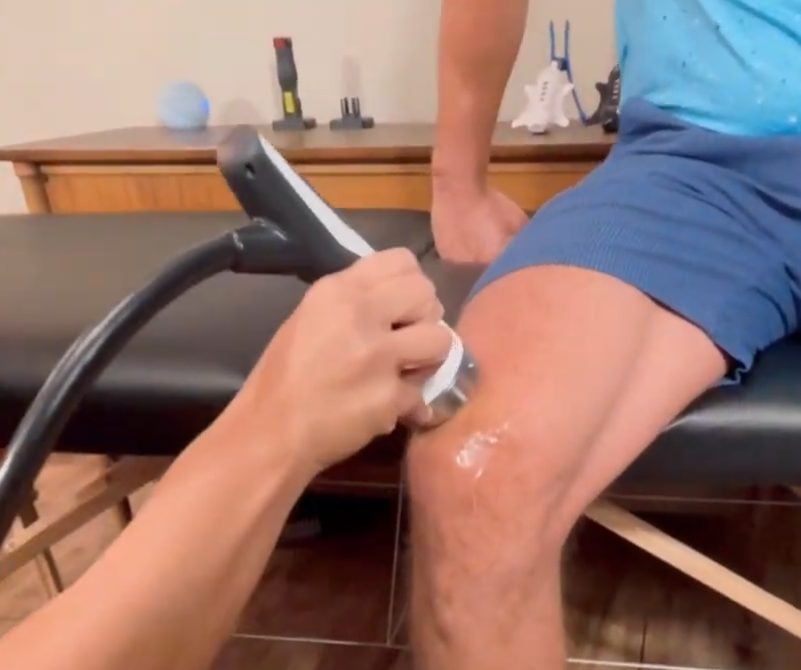
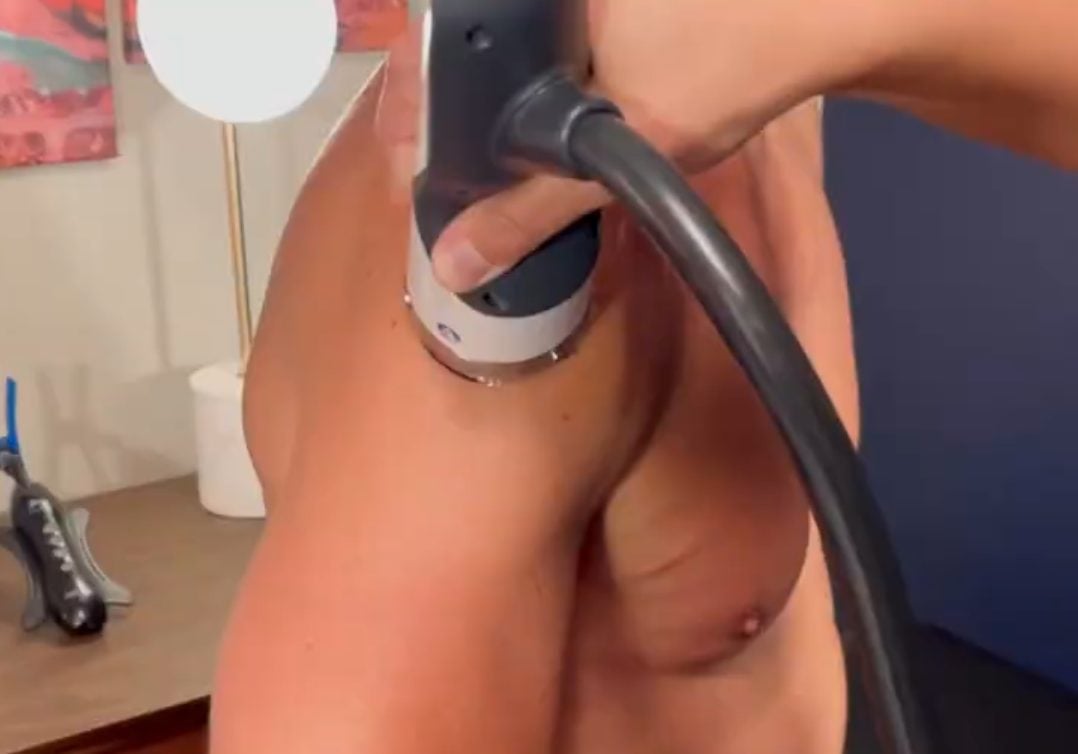
A session is quick but thorough. Most run 15 to 30 minutes, depending on how many areas we treat and whether chiropractic adjustments or soft tissue work are part of your visit.
Most people describe the feeling as rapid tapping or thumping that gets more intense over the sore spot. Some feel mild soreness for a day afterward, followed by relief.
There’s no anesthetic, no needles, and no downtime. Most people go straight back to their day.
How many sessions, and how soon you’ll know
Most people come in once a week. How many sessions you need depends on how severe and complex the problem is, but most courses of care run 8 to 12 sessions.
Some people notice a difference after the first visit. For most, the biggest changes show up around weeks 4 to 6.
Timing matters: heal first, then strengthen
Strengthening matters, but so does timing. Trying to rehab tissue while it’s still damaged is why people often feel fine during a workout and worse the next day.
So we start by helping the tissue heal, then add strengthening and mobility exercises as it’s ready to handle them.
When shockwave is one part of a bigger picture
Shockwave works on the problem at one spot. It doesn’t change why that spot broke down in the first place.
If your body is carrying itself unevenly, like standing with more weight on one leg, hips or shoulders that are twisted, or a spine under extra compression, some joints end up wearing down faster than they should. That often shows up as several problems on the same side of the body.
That’s why some patients come in for shockwave alone, and others pair it with upper cervical chiropractic or vestibular therapy to change how their body holds itself up.
Who shouldn’t have shockwave therapy
Shockwave isn’t right for everyone. We screen for these before treating:
- Pregnancy
- Active infection or open wounds in the treatment area
- Certain blood clotting disorders, or use of blood thinners
- Active cancer in the treatment area
- Growth plates in children (we don’t treat directly over them)
What people say
“My lower back, left knee and right ankle have extremely limited my mobility for the last few years… About a month ago I started the sessions. Last week I ran on the treadmill for the first time. The best thing is the next day I woke up and didn’t feel any pain in my lower back knee or ankle… I can finally workout and run again without the fear of waking up the next morning in severe pain.”
Jason P., Google review
“Dr. Sam and Dr. Lynn have been absolutely outstanding! I came to them struggling with plantar fasciitis, and they approached my care from a holistic perspective that went beyond just treating the symptoms. Their thorough assessments, personalized adjustments, and thoughtful guidance made all the difference. The results have been amazing — I’m back to running again, something I truly missed. I’m so grateful for their expertise, compassion, and commitment to helping patients heal and stay active. Highly recommend them to anyone looking for exceptional chiropractic care!”
Mary R., Google review
Individual results vary.
Common questions about shockwave therapy
Does shockwave therapy hurt?
It’s uncomfortable, but it shouldn’t be painful. We adjust the intensity so treatment stays tolerable for you.
How many shockwave sessions will I need?
It depends on how severe and complex the problem is. Most courses of care run 8 to 12 sessions, usually once a week.
Does shockwave therapy actually work?
Research supports it for the problem it’s designed for, which is chronic tendon and joint pain where tissue has stopped healing. It’s less useful for acute injuries and for pain that’s coming from somewhere other than the tissue being treated, which is why we examine first rather than treating whatever hurts.
Are there side effects?
The common ones are mild and short-lived: some soreness or slight swelling in the treated area for a day or two.
Do I need a referral?
No. You can schedule shockwave therapy directly.
Can I still exercise?
Usually yes, with adjustments. Tissue needs to start healing before it can handle strengthening, so we’ll tell you what to keep, what to pause, and when to add load back.
Can shockwave help plantar fasciitis?
It can, and plantar fasciitis is one of the most common reasons people come in for it. Read more: what plantar fasciitis recovery with shockwave actually looks like, week by week
Do you take insurance?
We are out of network with all carriers but can provide you with a superbill to submit for reimbursement.
Related pages
Further reading
Been dealing with this for months? Let’s find out whether the tissue can still repair.