
Headache and Migraine Treatment in Denver
For headaches that start in your neck, migraines that keep taking your days, and pain that comes back no matter what you try.
Serving the Denver metro from Wheat Ridge
The short version
Headaches that keep coming back are often driven by the neck, the eyes, or the balance system rather than the head itself. At Omega Functional Health in Wheat Ridge, we test all three and build care around what we find.
Does this sound familiar?
- Your headaches start at the base of your skull or behind your eyes
- Your neck and shoulders tighten up before or during a headache
- Bright lights, screens, or busy places set you off
- You feel dizzy or foggy along with the pain
- You plan your week around the next one
- Your headaches are getting more frequent, not less
If you nodded at two or more, you’re who we built this practice for.
Where long-standing headaches often start
Most of the people we see can point to a moment, or a slow buildup:
- A car accident or whiplash, even one that seemed minor at the time
- A fall or concussion, after which the headaches never fully went away
- Years at a desk or looking down at a phone
- Long screen days, where your eyes hold focus for hours with few breaks
- Jaw clenching or grinding, which loads the same joints and muscles as the upper neck (Can TMJ cause neck pain?)
Sometimes there’s no clear starting point at all. Either way, the question we answer is the same: what’s keeping them going now?
Why headaches keep coming back
Headaches and neck pain often travel together, and there’s a reason. The nerves at the top of your neck connect directly to the ones that carry pain from your head. When the joints and muscles up there are under strain, your brain often feels it as a headache.
So what puts them under strain? Your brain’s number one job is keeping you upright, and it uses three streams of information to do it: your eyes, the balance system in your inner ear, and signals from your body. When those don’t agree, your brain senses you’re more likely to fall, and the thing it most wants to protect in a fall is your neck. So it tightens your neck muscles, like bracing for impact, and keeps them that way.
At the same time, your eyes may be working overtime just to hold focus and keep the world steady. That constant effort is one reason light, screens, and busy places can set off a headache or migraine.
Pain relief quiets the headache. It doesn’t change the signal that keeps producing it. Finding that signal is what we focus on.

Types of headaches we see
- Headaches from the neck (cervicogenic headaches): pain that starts at the base of the skull and wraps forward, often on one side, and gets worse with certain neck positions.
- Tension-type headaches: a band of pressure around the head, often tied to neck and shoulder tightness.
- Migraines: throbbing pain, often with light or sound sensitivity, nausea, or aura.
- Vestibular migraines: dizziness or vertigo with or without a headache. (Vertigo & Dizziness)
- Headaches after a concussion or whiplash: pain that started with an injury and never fully resolved. (Concussion)
Types overlap, and many people have more than one. Testing is how we tell which ones are driving your headaches.
What we test
- Posture analysis: how your head, shoulders, and hips are holding you up, and how far your head sits forward or tilts.
- Eye tracking and balance testing: computerized testing (VNG and posturography) shows how hard your eyes and balance system are working.
- A focused exam of your upper neck and jaw, where many headaches start.
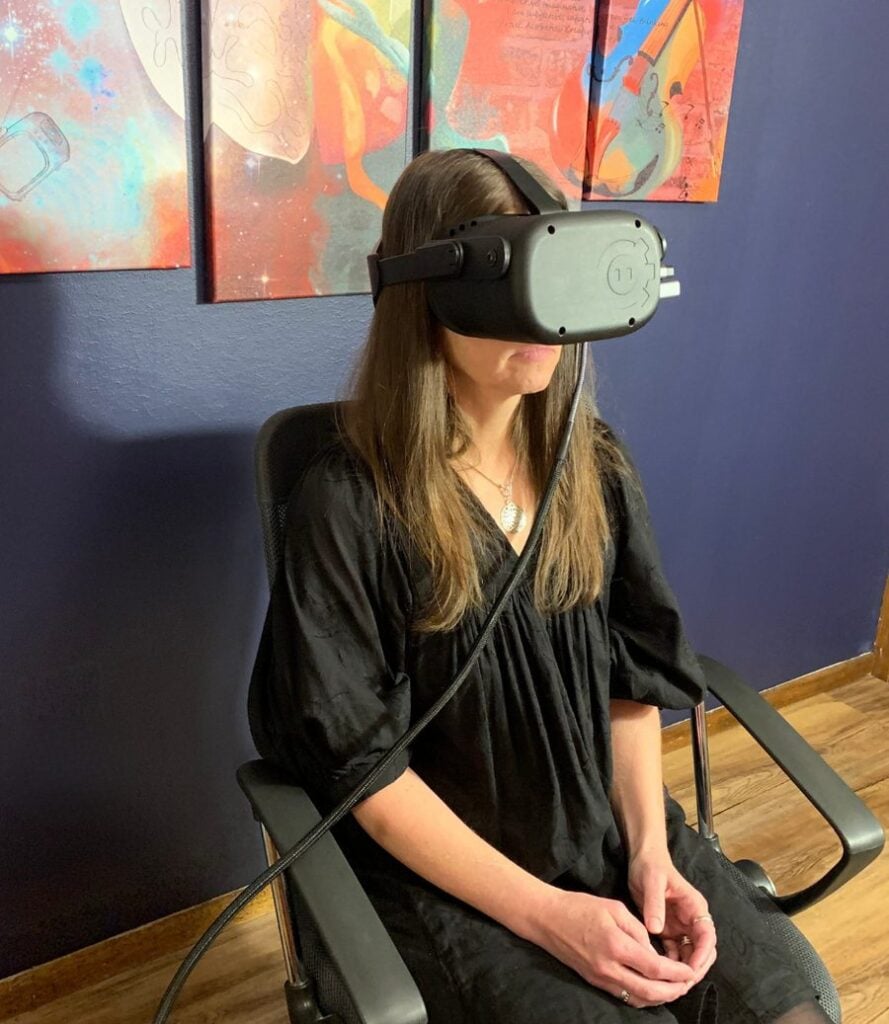
What care looks like
Care is weighted to your results, not a fixed protocol. It’s built on the two parts of The Omega Method:
- Upper cervical chiropractic: a precise, gentle correction calculated from your posture measurements, to take strain off the upper neck.
- Vestibular therapy: exercises that help your eyes and balance system work more efficiently, so your brain can stop bracing. Each one is tested against your results before we assign it.
When scar tissue in the neck is part of the problem, focused shockwave therapy may be added. Your exam decides.
Progress is re-measured along the way, so you see the change in data, not just in how you feel on a given day.
What this looks like in practice
“I had been having headaches 5 out of 7 days a week for longer than a year when I saw a special for shockwave therapy. I was skeptical at first but after 2 visits I was feeling improved mobility and less headaches. After 5 visits the headaches are no longer a part of my daily life. Dr. Sam’s plan is working and I am so glad I took that first step to give it a try. If you are having chronic pain I highly recommend a visit to Omega!”
Kathy M., Google review
Individual results vary.
Common questions about headaches and migraines
Can a chiropractor help with migraines?
Chiropractic care can help many people with migraines and chronic headaches, especially when the neck, posture, or balance system is part of the pattern. Our approach combines upper cervical chiropractic with eye and balance testing, so care is based on what’s actually driving your headaches.
Can neck pain cause headaches?
Yes. The nerves in your upper neck connect to the ones that carry head pain, so strain in the neck is often felt as a headache. Read more: Can neck pain cause headaches?
What is a cervicogenic headache?
A cervicogenic headache is a headache that comes from the neck. It usually starts at the base of the skull, often on one side, and can spread to the forehead or behind the eye. Neck movement or certain positions often make it worse.
What’s the difference between a headache and a migraine?
A migraine is a specific type of headache, usually throbbing, often on one side, and commonly paired with light or sound sensitivity, nausea, or aura. Many people have both migraines and other headaches, and they can share similar drivers.
Can headaches come from my jaw?
They can. The jaw and the upper neck share muscles and nerve pathways, so clenching or grinding can contribute to headaches and neck pain. Read more: Can TMJ cause neck pain?
Can you help with headaches after a car accident?
Yes. Whiplash can affect the joints of the upper neck as well as the balance and eye systems, which is why headaches sometimes show up or worsen weeks after the accident. We test all three.
What if I’ve had migraines for years?
Long-standing migraines can still improve. Many of the people we see have had them since childhood or for decades, and testing often turns up contributors that have never been looked at.
What does a headache specialist look for?
A headache specialist looks for the pattern behind your headaches. In our office, that means testing your posture, upper neck, eye movements, and balance to see which systems are contributing.
How many visits will I need?
It depends on your findings. We re-measure early in care, so you and we both know within the first few weeks whether things are improving.
Do I need a referral?
No. You can schedule a complimentary consultation directly.
Do you take insurance?
We are out of network with all carriers but can provide you with a superbill to submit for reimbursement.
Related conditions
Further reading
Tired of planning around your headaches? Let’s measure what’s actually going on.