
The Melillo Method in Colorado
Brain-based care for children who are struggling with focus, reading, behavior, or big emotions, built on what testing actually finds.
Wheat Ridge, CO, serving families across the Denver metro
The short version
When a child struggles with focus, reading, or emotional control, the cause is often physical, not behavioral. The two sides of the brain can develop at different rates, and early reflexes that should switch off in infancy can stay active and get in the way. The Melillo Method tests for both and uses targeted exercises to help the brain catch up. Dr. Sam works with children from a few weeks old through age 10.
Does this sound like your child?
- They can’t sit still, and homework turns into a daily battle
- Reading is a struggle. They skip words, reverse letters, or lose their place
- Noise, clothing tags, or busy places overwhelm them
- Meltdowns come fast, and transitions between activities set them off
- They’re clumsy, avoid physical play, or crawled late
- Their memory for facts is impressive, but social situations are hard
- You’ve been told they’ll grow out of it, and they haven’t
If more than a couple of those sound familiar, testing can tell you what’s underneath them.

What the Melillo Method is
The Melillo Method is a brain-based approach to ADHD, autism, dyslexia, sensory issues, emotional outbursts, and developmental delays.
It starts from a simple idea: the two sides of your child’s brain can develop at different speeds. Picture one side running on 5G while the other is still on dial-up. Both sides work. They just can’t keep up with each other, so information doesn’t pass between them cleanly.
That gap is what the method targets. Your child isn’t lazy, and they’re not short on intelligence. The two halves of the brain aren’t talking to each other fast enough.
So instead of managing the behavior, we work on the connection itself, using specific physical, sensory, and thinking exercises.
Why one side of the brain can fall behind
Brain development follows a schedule. The right hemisphere leads first, before birth and through roughly the first three years, building gross motor skills, sensory processing, and emotional connection. The left hemisphere takes over from about three to six, building fine motor skills and language.
From about age six, the lead alternates between the two sides until roughly age ten, when the brain reaches its adult size. That window is why the early years matter so much, and it’s why we work with children through age 10.
Here’s the part that surprises most parents: the two sides are supposed to end up different from each other. That specialization is normal and necessary. The problem isn’t asymmetry, it’s timing. When one side comes online too early or never takes its turn leading, the other side’s development gets held back.
When that happens, the right side can end up underdeveloped while the left races ahead. That pattern explains what many parents recognize immediately: a child with a remarkable memory, or one who excels in school, but who struggles with emotions, behavior, or coordination.
Retained primitive reflexes, explained
Babies are born with a set of automatic movements called primitive reflexes. These reflexes are like training wheels for the brain. They help it grow and develop through movement. Once the brain learns how to do the movement on its own, it integrates the reflex, like a software update on your phone. But when it doesn’t get that software update, the reflex stays turned on, keeping the brain from developing to its full potential.
Here’s what a few of them are doing:
- The ATNR turns the head to one side and extends the arm on that side. It’s what helps a baby work their way out of the birth canal, and later it lays groundwork for crawling and for using the two sides of the body independently.
- The Spinal Galant connects along the lower back. It helps build the wiring between the lower body and the brain, so the brain knows what the hips and legs are doing.
- The Palmar reflex makes a baby grip your finger, which is the beginning of hand control and eventually of holding things.
- The Moro is the startle response that makes a newborn fling their arms out. It’s the foundation of the whole fight-or-flight system, the body’s alarm.
Reflexes can stay switched on for lots of reasons: a difficult birth or newborn period, frequent illness in infancy, or skipping developmental stages, like walking before crawling or not getting much tummy time.
What retained reflexes look like at different ages
Babies and toddlers
Delayed milestones, clumsiness, poor head or body control, difficulty with crawling, trouble holding a crayon or feeding themselves.
Preschoolers
Constant fidgeting, W-sitting, difficulty sitting for a story, sensory sensitivities, frequent meltdowns, trouble with buttons, scissors, or utensils.
School-age children
Poor handwriting, slumping or slouching, reading difficulty, losing their place on the page, wrapping legs around chair legs, impulsivity, trouble with sustained attention.
What we measure
ADHD, dyslexia, and autism are usually looked at through behavior and school performance. They also have physical signs you can measure, and those signs are what we build a plan from.
- Primitive reflex testing: we check each reflex that should have been integrated (Moro, ATNR, Spinal Galant, Palmar, and others) and how strongly it’s still active.
- Hemispheric assessment: which side is developing more slowly, looked at through gross and fine motor skills, posture, coordination, and balance.
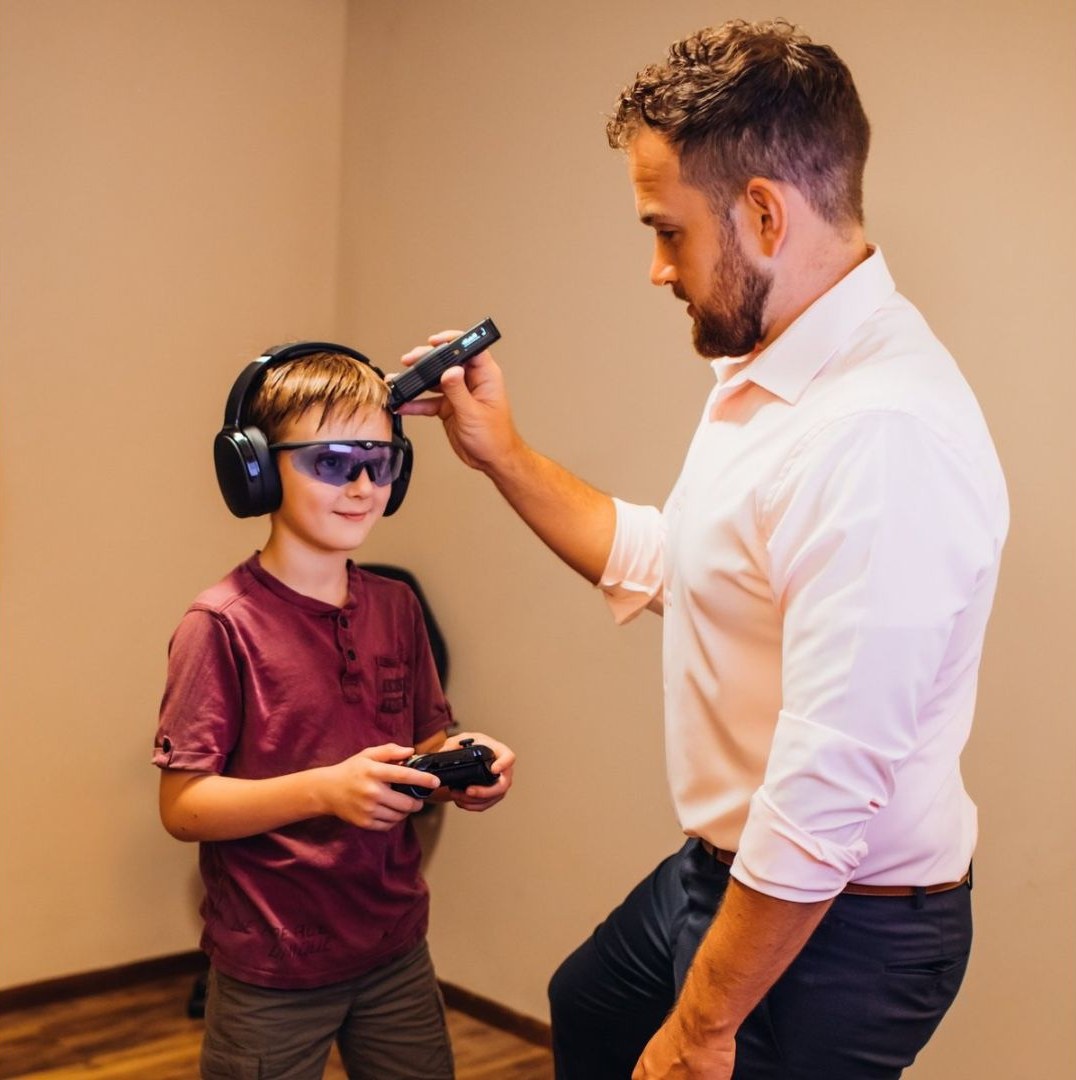
- Oculomotor assessment: how the eyes track, team, and hold a target. Eyes that jump off the line make reading exhausting no matter how good the phonics instruction is.
- Timing assessment: how accurately the brain coordinates movement in time, which underlies smooth movement, speech, and processing.
Ultimately the assessment is about how well the brain is working on all levels: from the brainstem, where basic functions like digestion, sleep, and breathing live, to the cerebellum, responsible for balance, coordination, and spatial awareness, to the cortex, where emotions, focus, and attention live. All parts of the brain have to work together, and when one or more of them don’t, that’s where things like sensory issues, emotional dysregulation, and sleep problems arise.
What care looks like
We typically work in 90-day blocks, with in-office visits once or twice a week and a home program customized to your child’s testing.
The home program takes about 30 minutes a day on average. It’s designed to supplement what we do in the office and help accelerate your child’s results.
Within each block, care moves through three stages:
1
Foundation and reflex integration
Calm the nervous system and address the retained reflexes that are interfering with everything else.
2
Sensory and motor rebuilding
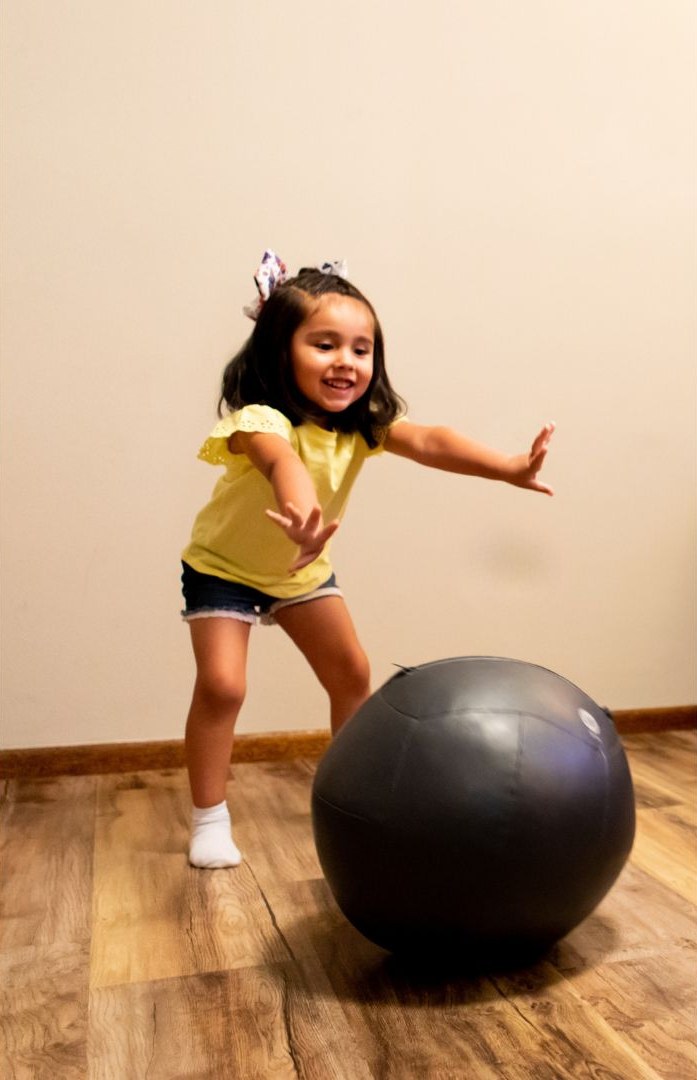
Balance and body awareness work, eye tracking and gaze stability, and cross-body movements that push the two sides of the brain to talk to each other.
3
Hemispheric co-activation
Targeted stimulation to the slower-developing side, plus combined thinking-and-moving tasks that build endurance for attention.
Progress is tracked along the way, and care is adjusted based on how your child responds. We support you and your child every step of the way.
Testing each reflex is a hands-on process, and the same is true of integrating one. It’s specific to the reflex and to your child, which is why we test in person rather than handing out a generic checklist.
What this looks like in practice
An 8-year-old boy came in with significant ADHD symptoms, frequent emotional outbursts, and reading about two years behind his classmates. He couldn’t sit at a desk for more than five minutes without redirection, transitions set off meltdowns, and he skipped words and reversed letters when reading.
What testing showed: several retained reflexes, including Moro, ATNR, Palmar, Rooting, and Spinal Galant. Notable right-side weakness in gross motor coordination and spatial awareness. Eye tracking that jumped off the page while reading.
What care included: a 12-week plan with right-side targeted sensory stimulation, daily reflex integration exercises at home and in office, and balance training paired with timing work.
How it went:
- Week 4: Moro reflex integrated, and his parents reported meltdowns roughly cut in half
- Week 8: able to sit and focus on homework for about 20 minutes, with noticeably smoother eye tracking
- Week 12: reading fluency improved, and his teacher reported he was participating in class without disrupting it
“Truly, I can say with 100% certainty, Dr Sam has made the biggest difference in my 2 year old daughter’s quality of life. She has a diagnosis that presents itself in the form of every developmental delay possible, but Dr Sam has helped to improve each of these areas tremendously. The biggest improvement, is my daughter now can regulate her nervous system and she thrives in social settings, something I would have truly not thought was possible a year ago.
The whole office is so good with my daughter, always so friendly and so happy to see us. And Dr Sam’s bedside manner when working with my previously over-stimulated daughter has always been so kind, intentional and patient.
I cannot recommend this practice enough!!”
Lauren S., Google review
“We highly recommend Omega Functional Health! In a matter of weeks, Dr. Sam helped our son make incredible strides with his Grosse motor skills as well in confidence and joy. He is wonderful with children and We could not be happier with our experience here. Effective, kind, and affordably priced.”
Elizabeth K., Google review
“Before meeting Dr. Sam, our daughter was completely dysregulated — struggling every day just to eat, needing a show on to get through everyday, and constantly overwhelmed by the world around her. We felt helpless and exhausted, unsure how to support her.
Since starting care with Dr. Sam, we have seen an incredible transformation. She is calmer, more connected, and no longer dependent on screen time. Her nervous system is healing, and for the first time, we feel like we’re watching our daughter come alive in the way she was always meant to.
Dr. Sam’s approach is full of compassion, wisdom, and intentional care. He doesn’t just treat symptoms — he looks for the root cause and partners with families to restore true health. We are beyond grateful for him and his team at Omega Functional Health.
If you’re a parent feeling lost or unsure about what to do next, please don’t give up hope. Dr. Sam gave us ours back.”
Peter W., Google review
Individual results vary. Details are shared with permission and de-identified.
What we work with
These labels describe different presentations of the same underlying issue, which is why testing matters more than the diagnosis a child arrives with.
- ADHD: difficulty sitting still, impulsivity, and trouble sustaining attention, often with retained reflexes creating constant background interference.
- Autism spectrum disorder: social and communication difficulty alongside sensory sensitivities, commonly with a significant gap between the two hemispheres.
- Dyslexia and reading difficulty: where eye tracking and timing problems make decoding far harder than it should be for a bright child.
- Sensory processing difficulties: overwhelm from noise, texture, clothing, or busy visual environments.
- Emotional dysregulation: fast, intense reactions and difficulty recovering, driven by a nervous system that’s already running hot.
- Motor delays: most commonly difficulty crawling, or trouble holding things like cups, markers, or toys.
Two things parents are often told
“They’ll grow out of it.”
Some children do. But when a hemispheric gap and retained reflexes are driving the difficulty, the brain keeps wiring around them, and the pattern can persist into adolescence and adulthood as continued struggles with organization, focus, and emotional regulation.
“It’s behavioral” or “it’s genetic.”
Genetics matter. But much of what looks purely behavioral has physical, measurable signs underneath it, which is the entire reason we test before recommending anything.
Common questions from parents
What is the Melillo Method?
The Melillo Method is a brain-based approach to neurodevelopmental challenges like ADHD, autism, and dyslexia. Rather than managing behavior, it addresses primitive reflexes and functional disconnection, meaning the two sides of the brain develop at different rates, using targeted sensory, motor, and cognitive exercises.
What is the Melillo Method for autism?
For children on the autism spectrum, the method focuses on the gap between the two hemispheres and on retained primitive reflexes, then uses specific sensory, motor, and cognitive exercises to improve how the two sides coordinate. It works alongside other support a child is receiving rather than replacing it.
What are retained primitive reflexes?
Primitive reflexes are automatic movements babies are born with. They work like training wheels for the brain, helping it grow and develop through movement. Once the brain can do the movement on its own, it integrates the reflex, like a software update on your phone. When that update doesn’t happen, the reflex stays turned on, and your child spends the day fighting a movement they didn’t choose. That shows up as fidgeting, poor posture, clumsiness, messy handwriting, and trouble sitting still.
Why do children keep their primitive reflexes?
It can follow a difficult birth or newborn period, recurrent illness in infancy, or skipping developmental stages, such as walking before crawling or limited tummy time.
How can I tell if my child has retained reflexes?
Early signs include clumsiness, poor posture, late movement milestones, and difficulty with fine motor tasks like holding a crayon or using utensils. In older children it often looks like extreme fidgeting, poor handwriting, reading difficulty, and sensory sensitivities. Testing is the only way to know which reflexes are still active and how strongly.
What’s the link between primitive reflexes and ADHD?
A reflex that’s still turned on creates constant noise in the nervous system. That noise competes with the parts of the brain in charge of impulse control and staying focused. It’s why a child can be told a hundred times to sit still and genuinely not be able to.
Does this mean something is wrong with my child’s brain?
No. The two sides of the brain are supposed to develop differently and specialize, and that difference is normal and necessary. What we look for is a timing problem: one side leading too early, or not taking its turn, which holds the other side back. That’s a developmental sequence issue, not damage.
What ages do you work with?
Dr. Sam works with children from a few weeks old through age 10.
How long does the program take, and what do we have to do at home?
Care runs in 90-day blocks, with visits once or twice a week and a home program of about 30 minutes a day. The home piece isn’t optional. It’s where most of the repetition happens, and it’s the strongest predictor of how well care progresses.
Does my child need a diagnosis first?
No. Many families come in without one, or unsure whether to pursue one. Our testing looks at reflexes, hemispheric development, eye movement, and timing, which doesn’t depend on having a label already.
Should we stop occupational therapy, speech therapy, or school services?
Not necessarily. Many of our families continue with them. Our testing often adds information their other providers can use, and we’re glad to coordinate.
We’ve already tried other therapies. Why would this be different?
It might not be, and the consultation is where we tell you honestly. What differs is the starting point: we test reflexes, hemispheric development, eye movement, and timing first, then build the plan around those specific findings rather than a standard program.
What triggers my child’s meltdowns?
Triggers are usually environmental, like loud or visually busy places, transitions, or changes in routine. Underneath, a child whose nervous system is already running in fight-or-flight has very little margin left, so an ordinary demand can tip them over.
What happens in the virtual consultation?
We talk through your child’s history, what you’re seeing at home and at school, and what you’ve already tried. By the end of it we’ll tell you whether we think an evaluation is worth doing.
Do you take insurance?
We are out of network with all carriers but can provide you with a superbill to submit for reimbursement.
What the research looks at
This approach comes out of a body of peer-reviewed work on hemispheric development and primitive reflexes, much of it published by Melillo, Leisman, and colleagues. Studies in this area have examined whether hemisphere-specific exercise programs reduce retained reflexes, how retained reflexes relate to hemispheric connectivity in autism, and whether targeted motor and sensory training affects attention.
Research is also looking at the physical markers that show up alongside these conditions, including reduced activity in the calming side of the nervous system, differences in eye movement and balance testing, and altered neural timing.
This is an active and evolving area, and the studies vary in size and design. We don’t promise a particular outcome. We test, we build a plan around what we find, and we re-test so you can see what’s changing.
Selected references
- Melillo R, Leisman G. Autistic spectrum disorders as functional disconnection syndrome. Reviews in the Neurosciences. 2009;20(2):111-131.
- Melillo R, Leisman G, Machado C, et al. The relationship between retained primitive reflexes and hemispheric connectivity in autism spectrum disorders. Brain Sciences. 2023;13(8):1147.
- Melillo R, Leisman G, Mualem R, Ornai A, Carmeli E. Persistent childhood primitive reflex reduction effects on cognitive, sensorimotor, and academic performance in ADHD. Frontiers in Public Health. 2020;8:431835.
- Leisman G, Melillo R. Front and center: maturational dysregulation of frontal lobe functional neuroanatomic connections in attention deficit hyperactivity disorder. Frontiers in Neuroanatomy. 2022;16:936025.
- Leisman G, Melillo R. Evaluating primitive reflexes in early childhood as a potential biomarker for developmental disabilities. Journal of Paediatrics and Child Health. 2025.
Related pages
Further reading
Wondering what’s underneath your child’s struggles? Let’s find out.