
Concussion Treatment in Denver
For when it’s been weeks, months, or even years since your concussion, and you still don’t feel like yourself.
Serving the Denver metro from Wheat Ridge
The short version
Most concussion symptoms settle within a couple of weeks. When they don’t, it’s often because the eyes, the balance system, and the neck haven’t recovered together. At Omega Functional Health in Wheat Ridge, we test all three and build care around what we find.
Does this sound familiar?
- You’ve had headaches since the injury
- Screens, reading, or busy rooms wear you out fast
- You feel dizzy, foggy, or a step behind
- Your neck has been stiff since the fall or accident
- You struggle to focus the way you used to
- People expect you to be over it by now
If you nodded at two or more, you’re who we built this practice for.
Why concussion symptoms linger
Concussion symptoms usually clear within a week or two. But dizziness, vertigo, and balance problems keep going in 10 to 30 percent of cases (Murray et al., British Journal of Sports Medicine, 2017). If you’re in that group, it doesn’t mean something is wrong with you. It means the systems involved haven’t recovered evenly.
A concussion affects the same systems your brain uses to know where you are: your eyes, the balance system in your inner ear, and your neck. The force that shakes the brain almost always strains the neck too, which is why concussions and whiplash so often happen together.
When those systems don’t recover together, your brain has to work much harder to keep your vision steady and your body balanced. That constant effort is exhausting. It’s a big part of why ordinary things like reading, driving, or a grocery store can bring on headaches, dizziness, and fog.
Your neck gets pulled in as well. When your balance is off, your brain senses you’re more likely to fall, and it tightens your neck muscles to protect it. That guarding can keep headaches and neck pain going long after the injury itself.
Rest helps early on. But when symptoms last, the brain usually recovers through targeted, carefully dosed challenges, not more rest.
Who we see
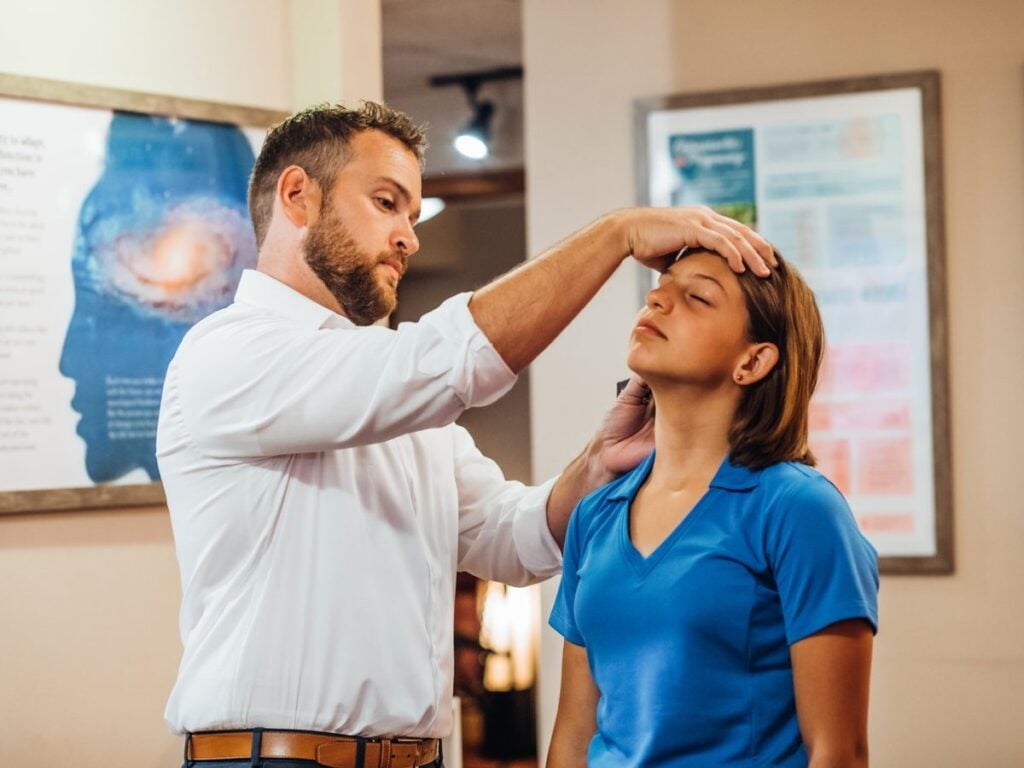
- Teens and adults still having symptoms weeks, months, or years after a concussion
- People who’ve had more than one concussion
- Concussions from car accidents, falls, sports, or work injuries
- Whiplash with headaches, dizziness, or trouble focusing
For children 10 and under, we start with the Melillo Method.
What we test
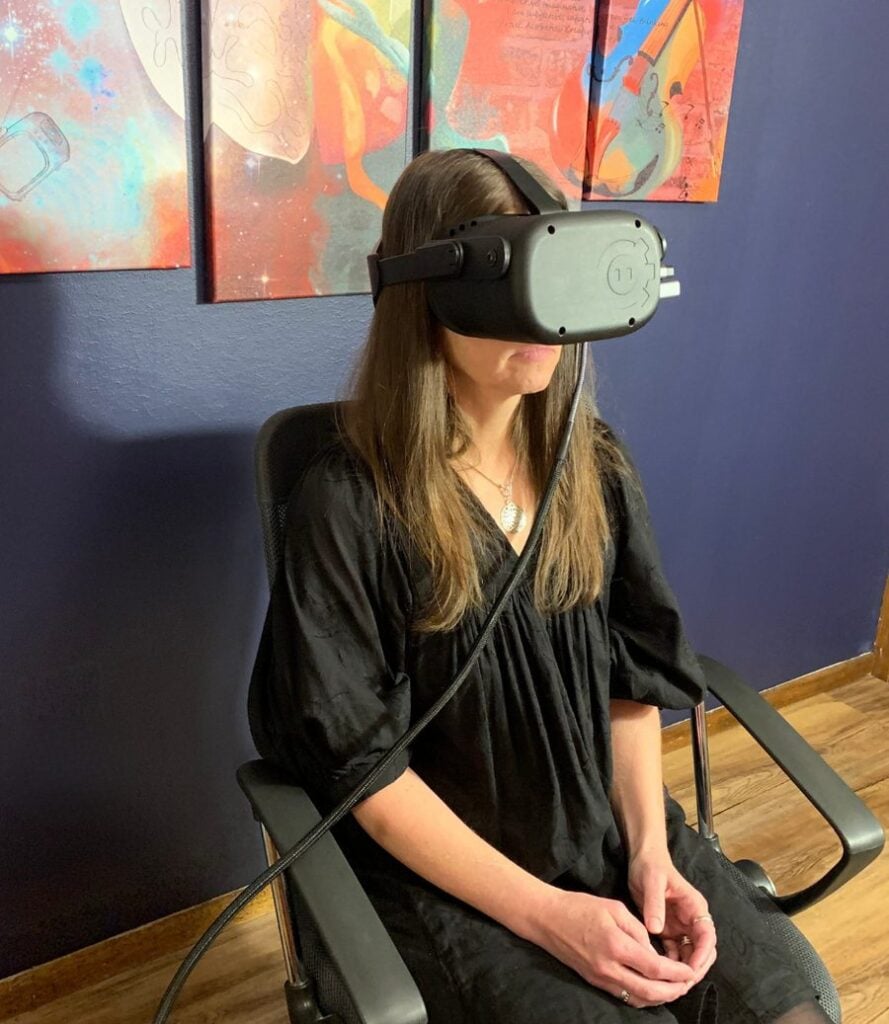
- Eye movement testing (VNG): how your eyes track, focus, and hold steady, including in complete darkness.
- Balance testing (posturography): how steady you are when your eyes, feet, or both are challenged.
- Posture analysis and a neck exam: how the injury has changed the way you hold your head and body.
What care looks like
Care is weighted to your results, not a fixed protocol. It’s built on the two parts of The Omega Method:
- Vestibular therapy: exercises for your eyes and balance system, dosed carefully to challenge your brain without triggering a setback. Each one is tested against your results before we assign it.
- Upper cervical chiropractic: a precise, gentle correction calculated from your posture measurements, for the neck strain that often comes with a concussion.
Progress is re-measured along the way, so you see the change in data, not just in how you feel on a given day.
What this looks like in practice
“… I mentioned hurting my ribs playing hockey but hadn’t told Dr. Sam that I’d also fallen and bumped my head. After reviewing my vestibular assessment, he asked whether I’d bumped my head. I was stunned. He repeated the assessment and worked through several targeted exercises with me to determine the right approach. That experience gave me a much deeper appreciation for his attention to detail and the individualized care I was receiving.”
Keith B., Google review
Individual results vary.
Common questions about concussion
What is post-concussion syndrome?
Post-concussion syndrome is when concussion symptoms like headaches, dizziness, fatigue, brain fog, or trouble focusing last longer than expected, often weeks to months or more after the injury.
Can you help if my concussion was years ago?
Yes. Many of the people we see had their concussion years ago. Testing often shows eye, balance, or neck changes that have been there since the injury and were never addressed.
Can vestibular therapy help after a concussion?
Research suggests vestibular therapy can improve dizziness and function after a concussion. We use testing to decide which exercises you need and how hard to push.
Can a chiropractor help with concussion symptoms?
A chiropractor trained in vestibular testing and therapy can help with many lingering concussion symptoms, especially dizziness, headaches, and neck pain. As a concussion specialist, Dr. Sam combines eye and balance testing with vestibular therapy and upper cervical chiropractic.
Do you see teenagers after a concussion?
Yes. We see teens and adults. Sports concussions in particular often show up as trouble with screens, reading, or getting back to practice, and those are exactly the systems our testing looks at.
Will the exercises make my symptoms worse?
Mild, temporary symptoms can happen, because the exercises are designed to challenge your brain. We dose each one to your results so it challenges without overwhelming.
Can a concussion cause neck pain?
Often, yes. The same force that affects the brain strains the neck, and your brain then tightens those muscles to protect it. That’s why headaches and neck stiffness are so common after a concussion. (Neck Pain)
How many visits will I need?
It depends on your findings. We re-measure early in care, so you and we both know within the first few weeks whether things are improving.
Do I need a referral?
No. You can schedule a complimentary consultation directly.
Do you take insurance?
We are out of network with all carriers but can provide you with a superbill to submit for reimbursement.
Related conditions
Further reading
References
- Murray DA, Meldrum D, Lennon O. Can vestibular rehabilitation exercises help patients with concussion? A systematic review of efficacy, prescription and progression patterns. British Journal of Sports Medicine. 2017;51(5):442-451.
- Galeno E, Pullano E, Mourad F, Galeoto G, Frontani F. Effectiveness of Vestibular Rehabilitation after Concussion: A Systematic Review of Randomised Controlled Trials. Healthcare (Basel). 2022;11(1):90.
Still not feeling like yourself? Let’s measure what’s actually going on.