
Vestibular Therapy in Denver
Retrain the system that tells your brain which way is up.
In-person care in Wheat Ridge, CO, serving the Denver metro
The short version
Vestibular therapy retrains how your eyes, inner ear, and body work together to keep you steady. We test that system first with video eye tracking and a balance platform, then build in-office work and a home program around your results. Every exercise is tested in the office before it goes home with you.
What vestibular therapy is
Your vestibular system lives in your inner ear. It senses every tilt, turn, and change in speed, and it works with your eyes and the signals from your body to answer one question all day long: which way is up?
When that system sends unreliable information, your brain works overtime to keep your vision steady and your body upright. It braces to protect you, and the effects show up as dizziness, unsteadiness, headaches, fatigue, or a neck that never lets go.
Vestibular therapy is targeted exercise that retrains the system. It works because your brain recalibrates through movement. That’s also why avoiding everything that sets you off tends to make the problem worse over time.
Why we test before we treat
Dizziness feels the same from the inside no matter what’s causing it. Testing shows what’s actually happening:
- Video eye tracking (VNG): how your eyes follow and hold a target, including in complete darkness, where they can’t compensate.
- Balance platform (posturography): how steady you are when your eyes, your feet, or both are challenged, and which system your brain is leaning on.
- Positional testing: when positional vertigo (BPPV) is suspected.
- Posture analysis: how your body has shifted to protect you.
Your results decide which exercises you need, how hard to push, and where to start.
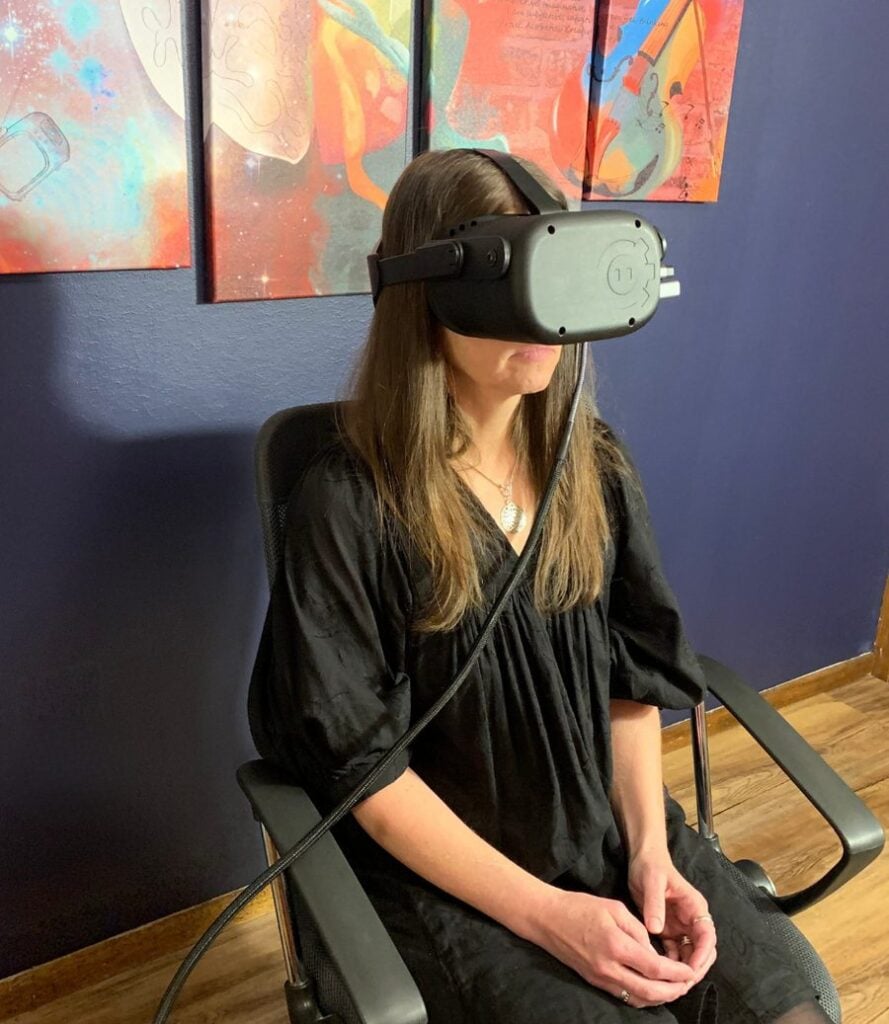
What a session looks like
In the office, we work through exercises matched to your results: eye movement and gaze stability work, balance training, and movements that challenge your system just enough to make it adapt. We watch how you respond and adjust as we go.
Then you go home with a short program, usually 10 minutes or less a day. Every exercise in it has been tested in the office first, so you only practice what we’ve watched work. No generic handouts.
We re-test along the way, so you see the change in your numbers, not just in how you feel on a given day.
Repositioning for positional vertigo
If you get brief, intense spinning when you roll over, lie down, or look up, tiny crystals in your inner ear may have shifted where they don’t belong. That’s BPPV, one of the most treatable causes of vertigo. Testing shows which canal is involved, and a canal repositioning procedure guides the crystals back.
What vestibular therapy can help with
- Vertigo and dizziness
- Concussion recovery
- POTS and dysautonomia
- Headaches and vestibular migraine
- Neck pain that comes with dizziness or unsteadiness
- Feeling unsteady in the dark or on uneven ground
- Motion sickness in cars, on boats, or with screens
Why it pairs with upper cervical chiropractic
Retraining your eyes and balance system matters. But if your body is still twisted and compressed from years of protecting you, your neck keeps sending your brain a distorted signal.
That’s why we test both. Your results tell us whether to start with vestibular therapy, upper cervical care, or both. Together they make up the Omega Method.
What to expect
1
Complimentary consultation
A conversation about what you’ve been dealing with and what you’ve already tried. By the end, we’ll tell you honestly whether we think we can help.
2
Comprehensive assessment
We measure your eye movement, your balance, and how you’re actually standing.
3
Your results and a plan
We walk you through your results and what they mean, then build a plan around what we found.
4
Care and progress checks
In-office sessions and a home program, with progress checks along the way and a side-by-side comparison at the end of your plan.
What people say
“I highly recommend Dr. Sam and Dr. Lynn for your neurology based wellness needs. … Beyond the brain work that we’ve done, Dr. Sam is also helping me physically with mobility, joint pain, and balance so that I can perform optimally in the gym as I am a competitive athlete. I’m so grateful that I found their practice!”
Victoria E., Google review
“Omega functional health has been a blessing to our family. Our 14 year old son Gabriel has struggled for years with anxiety and balance issues causing motion sickness making it impossible for him to ride in a vehicle without having a panic attack. Dr. Sam found that Gabriel has (had) issues with vestibular processing. Thru the care and therapy Dr. Sam implemented Gabriel’s improvement has been impressive, with non invasive drug free treatments. We’re amazed and thankful to be able to take a long drive thru the mountains without panic attacks! Also need to mention how much we appreciate a warm welcome from Kat at the front desk at every visit.”
Evelyn M., Google review
“My son and I saw Dr Sam to address issues with motion sickness and it seems to have helped tremendously so far. I also took my infant here for help integrating primitive reflexes that seemed to be taking longer than usual to go away. She is doing awesome now and on track for all milestones.”
Laura M., Google review
Individual results vary.
Common questions about vestibular therapy
What is vestibular therapy?
Targeted exercise that retrains how your eyes, inner ear, and body work together, built around what your testing shows.
Is vestibular therapy the same as vestibular rehab?
Yes. Vestibular therapy, vestibular rehab, and vestibular rehabilitation all describe the same kind of care.
Will the exercises make me dizzy?
Mild, temporary symptoms can happen, because the exercises are designed to challenge your brain. We dose each one to your results so it challenges without overwhelming.
Do I have to do exercises at home?
Yes, and that’s where most of the change happens. Your program usually takes 10 minutes or less a day, and every exercise in it has been tested in the office first.
How long does vestibular therapy take?
It depends on what your testing shows and how consistent you are at home. We re-test early, so within the first few weeks you’ll know whether things are changing.
Can vestibular therapy help after a concussion?
Research supports it for lingering dizziness and balance problems after a concussion. Testing tells us which exercises you need and how hard to push.
Do you see children?
Yes. For children 10 and under, balance and eye-movement problems are often part of a bigger developmental picture, so we start with the Melillo Method.
Do I need a referral?
No. You can schedule a complimentary consultation directly.
Do you take insurance?
We are out of network with all carriers but can provide you with a superbill to submit for reimbursement.
Related pages
Still feeling off balance? Let’s find out why.