
Cervicogenic Headache Treatment: Why the Upper Neck, Balance System, and Tissue All Matter
Written by Dr. Sam McDonald, DC (Colorado Chiropractic License CHR.0007574), Omega Functional Health.
If you have been told you have cervicogenic headaches, or you strongly suspect your neck is behind your head pain, you have probably already tried a few things. Pain relievers. Massage. A round of neck exercises. Maybe an injection.
For many people, those help. For others, the relief fades, and within a few weeks the same headache is back in the same place.
When that keeps happening, it is worth stepping back and asking a different question. Not “what else can I try for the pain,” but “what is keeping my neck irritated in the first place?”
What does standard cervicogenic headache treatment look like?
Most care for neck-driven headaches draws from a familiar set of tools, and each has a real place.
- Medication. Over-the-counter pain relievers and anti-inflammatories are usually the first step. They can take the edge off, though they do not address why the neck is irritated, and frequent use can contribute to rebound headaches.
- Exercise and physical therapy. Training the deep muscles at the front of the neck, along with posture and shoulder blade work, has some of the better research support for cervicogenic headache.
- Manual therapy. Mobilization, manipulation, and soft tissue work aim to restore motion and reduce muscle guarding.
- Injections and procedures. For selected, stubborn cases, nerve blocks and related procedures are used both to confirm where the pain is coming from and to reduce it.
Many people improve with these approaches, and they are worth trying.
Why do cervicogenic headaches keep coming back?
When treatment focuses on the painful area alone, it can miss the reason the area became painful. A tight muscle at the base of the skull can be massaged, but if it is tight because it is compensating for something else, it tends to tighten right back up.
In our experience, persistent cervicogenic headaches are usually being maintained by one or more of three things: how the upper neck is positioned and moving, how well the balance system is doing its job, and whether the local tissue ever fully healed. That is the basis of the Omega Method, the three-part approach Dr. Sam uses for complex neck and head cases.
Part 1: The upper neck and how your body holds itself upright
The top of your neck carries the full weight of your head, and it sits at the junction between your head and the rest of your body. When the way your body holds itself upright is off, even slightly, the upper neck is often where the extra load ends up.
We look at this with a posture check that measures how weight is distributed between your left and right sides, whether your body tilts, whether your hips and shoulders are rotated, and how your head and neck are tilted. The idea is simple: a well-functioning nervous system keeps the body as upright and efficient as it can. When it cannot, the pattern of compensation shows up in those measurements.
Those findings guide upper cervical chiropractic care, which uses precise, gentle corrections at the top of the neck based on your specific measurements rather than a general, one-size-fits-all adjustment. Research on spinal manipulation for cervicogenic headache is encouraging, although most studies have looked at manipulation in general rather than upper cervical techniques specifically.
Part 2: The balance system and why your neck may be working overtime
Your brain works out where your head is in space using three main sources of information: your inner ear, your eyes, and sensors in your joints and muscles, including a dense cluster in the upper neck.
When the inner ear or the eye movement system is not pulling its weight, the brain can lean harder on the neck to fill in the gap. The small muscles at the base of the skull then work harder all day, for months or years. That extra effort can keep them sensitized, and sensitized upper neck tissue can feed straight into head pain.
This is also why neck-related headaches and dizziness so often travel together, a connection we explore in Can Neck Pain Cause Dizziness?
We test how your eyes, inner ear, and balance are working together. Where that testing shows a problem, vestibular rehab (balance retraining) is used, with in-office work and specific home exercises chosen based on your results.
Part 3: Local tissue that never fully healed
The suboccipital muscles, the upper trapezius, and the sternocleidomastoid running along the side of the neck are all common sources of referred head pain. After an old injury or years of overload, these tissues can develop trigger points and areas of poor tissue quality that keep sending pain signals long after the original problem.
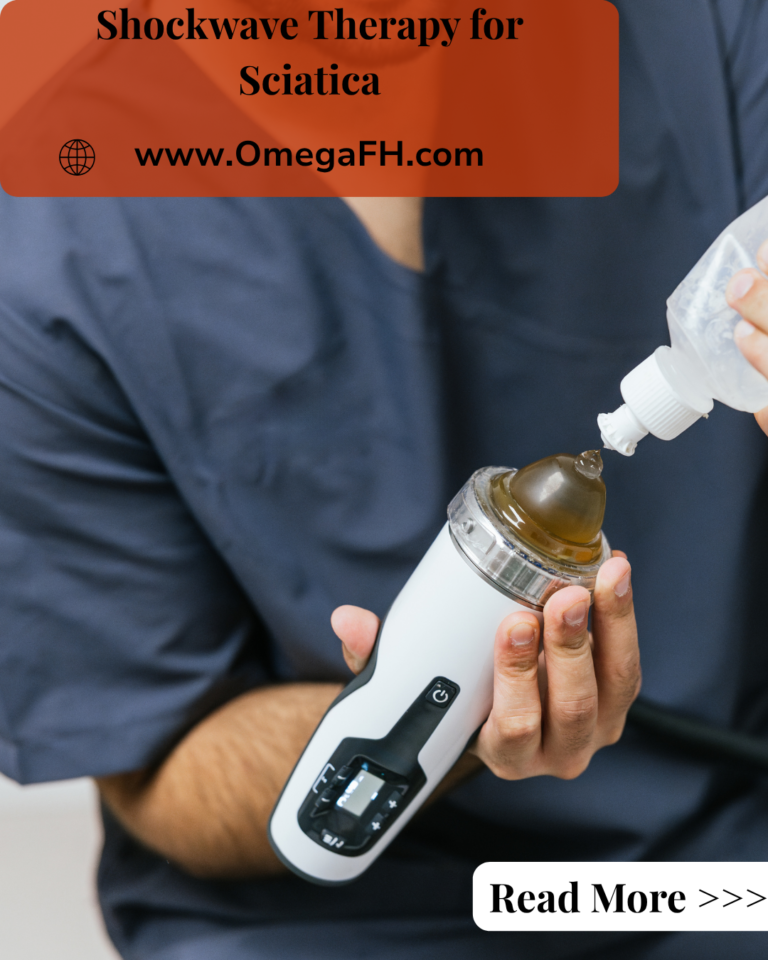
Where there is genuine tissue involvement, focused shockwave therapy can be applied directly to the affected area. Focused shockwave delivers acoustic energy to a specific depth, with the goal of improving blood flow and stimulating the body’s own repair response. Some patients find the treatment uncomfortable in the moment, and intensity is adjusted to tolerance.
How do the three parts fit together?
This is not a fixed protocol where everyone gets the same thing. The mix depends on what your testing shows.
One person’s headaches may be driven mostly by upper neck position, with a smaller balance component. Another may have a clear balance deficit and a neck that is simply doing too much compensating. Someone else may have one stubborn area of scar tissue from an old whiplash injury. Care is weighted toward what we actually find, and progress is re-checked along the way so the plan can change if something is not working.
How we determine what is driving your cervicogenic headache
The process starts with a complimentary consultation, where we listen to your history and decide together whether an assessment makes sense. The assessment includes balance and eye movement testing, a postural analysis, and an examination of your neck. At a follow-up visit, ideally within a day or two, we walk you through the findings and recommendations before any care begins.
Does this replace traditional headache care?
No. Neurologists, primary care physicians, physical therapists, and headache specialists do important work, and many people are well served by them. Our approach is most useful for people whose headaches have persisted despite reasonable care, and it can be combined with other treatment.
A sudden, severe headache unlike any you have had before, or a headache with fever, confusion, weakness, or changes in vision or speech, is an emergency and needs immediate care.
Who may benefit from this approach?
- Adults with headaches that begin in the neck or at the base of the skull
- People whose headaches improved with past treatment but keep returning
- Anyone with both headaches and dizziness, unsteadiness, or motion sensitivity
- People whose headaches began after a car accident or neck injury
- Adults with one-sided headaches that are stirred up by neck movement or sustained postures
What does the research say?
A randomized trial of exercise and manipulative therapy for cervicogenic headache found that both reduced headache frequency and intensity, with benefits maintained over a year of follow-up. A later dual-center trial found that spinal manipulation reduced cervicogenic headache days compared with a light massage control, and a systematic review of manual therapies concluded that they may be effective while calling for more rigorous research.
For tissue-focused care, a meta-analysis of randomized trials found that shockwave therapy improved pain and pressure sensitivity in neck and shoulder myofascial pain, though not neck disability scores. A 2025 randomized trial compared shockwave and manual therapy on sternocleidomastoid trigger points in people with cervicogenic headache.
Research on the link between neck sensors and balance supports the idea that upper neck problems can affect head and eye control. As with any area of research, study sizes are often modest and methods vary, so these findings are promising rather than definitive.
What this approach does and does not claim
We do not claim to cure headaches or to guarantee a particular outcome. We do not claim that every headache comes from the neck. What we offer is a thorough look at three common contributors to persistent neck-driven headaches and care built around what we find, with progress measured along the way.
Taking the next step
If your headaches keep returning despite care that has helped for a while, it may be worth finding out which of these three contributors applies to you. Before you book with anyone, these common myths about cervicogenic headache relief may save you some trial and error. And if you are comparing options in the Denver area, our guide to finding a headache chiropractor near you covers what a thorough first visit should include. Omega Functional Health serves Wheat Ridge, Denver, Arvada, Lakewood, Golden, Littleton, and surrounding Colorado communities.
Schedule a Complimentary ConsultationReferences
- Jull G, Trott P, Potter H, et al. A randomized controlled trial of exercise and manipulative therapy for cervicogenic headache. Spine. 2002;27(17):1835-1843.
- Haas M, Bronfort G, Evans R, et al. Dose-response and efficacy of spinal manipulation for care of cervicogenic headache: a dual-center randomized controlled trial. The Spine Journal. 2018;18(10):1741-1754.
- Chaibi A, Russell MB. Manual therapies for cervicogenic headache: a systematic review. The Journal of Headache and Pain. 2012;13(5):351-359.
- Bogduk N, Govind J. Cervicogenic headache: an assessment of the evidence on clinical diagnosis, invasive tests, and treatment. The Lancet Neurology. 2009;8(10):959-968.
- Jun JH, et al. The effect of extracorporeal shock wave therapy on pain intensity and neck disability for patients with myofascial pain syndrome in the neck and shoulder: a meta-analysis of randomized controlled trials. American Journal of Physical Medicine & Rehabilitation. 2021;100(2):120-129.
- Comparison of extracorporeal shock wave therapy and manual therapy on active trigger points of the sternocleidomastoid muscle in cervicogenic headache: a randomized controlled trial. 2025. PMID: 40270630.
- Treleaven J. Sensorimotor disturbances in neck disorders affecting postural stability, head and eye movement control. Manual Therapy. 2008;13(1):2-11.
Learn more about how we find what keeps headaches coming back on our headaches and migraines page.