
POTS and Dysautonomia Care in Denver
For when standing up, showering, or a trip to the store leaves you dizzy, drained, and wondering why.
Serving the Denver metro from Wheat Ridge
The short version
When your nervous system stays stuck on high alert, standing up and getting through a normal day become harder than they should be. Most approaches work on the output, asking your body to calm down through breathing or cold exposure. At Omega Functional Health in Wheat Ridge, we work on the input: what your eyes, inner ear, and body are telling your brain about where you are and which way is up. When those signals don’t line up, your brain can’t confirm you’re safe, so it stays on alert. We test them, and we retrain them.
Does this sound familiar?
- You get lightheaded or your heart races when you stand up
- An ordinary day leaves you completely wiped out
- Heat, hot showers, or standing in line make everything worse
- You feel foggy, dizzy, or off balance, even sitting still
- Digestion, temperature, or sleep have all become unpredictable
- You’ve been doing the fluids, salt, and compression, and you still struggle
If you nodded at two or more, you’re who we built this practice for.
What dysautonomia actually is
Your autonomic nervous system runs everything you don’t think about: heart rate, blood pressure, digestion, temperature, sleep, and how alert or calm you feel. Dysautonomia means that system isn’t regulating well. There are several named patterns within it, and POTS (postural orthostatic tachycardia syndrome) is the most familiar one, where your heart rate climbs sharply when you stand.
Underneath the labels, there’s usually one thing in common: the system is stuck on the protection setting. Fight or flight is supposed to be temporary. When it stops switching off, the effects show up everywhere, which is why dysautonomia rarely stays in one lane. Fatigue, dizziness, digestion, temperature, and sleep all come from the same control system.
The other half of that system is the rest-and-recover side, carried largely by the vagus nerve. It’s the brake to fight or flight’s accelerator. When your brain believes you’re under threat, it won’t apply that brake, no matter how much you want it to.

Why standing up is so hard
Every time you stand, gravity pulls blood toward your legs, and your nervous system has to respond within a second or two to keep blood flowing to your brain.
Here’s the part that usually gets missed. Your brain doesn’t wait to detect a drop in blood pressure before responding. It starts adjusting the moment your inner ear senses you changing position, because the balance organs in your inner ear are wired directly to the circuits that control heart rate and blood vessel tone. In other words, your balance system tells your circulation you’re about to stand before you finish standing.
If that gravity and movement information is unreliable, the response arrives late, or too strong, or not at all. And a brain getting confusing information about which way is up has a good reason to stay in protection mode: it can’t be confident you’re safe and upright.
Your neck gets pulled into it too. When your balance is off, your brain braces your neck to protect it in case you fall. That constant guarding is another signal that you’re under threat, which keeps the accelerator down.
Why breathing exercises and cold plunges only go so far
Most nervous system advice works on the output side: breathwork, cold exposure, tapping, humming, vagus nerve exercises. These help many people, and they’re worth doing. They’re ways of asking your nervous system to calm down.
But they don’t change the information your brain is working from. If the signals about gravity, movement, and where your body is in space are unreliable, your brain keeps concluding that you’re not safe, and the calming techniques have to be repeated every day just to hold ground.
That’s the gap we work in. Instead of only asking the system to relax, we test the inputs it’s using and retrain them, so the conclusion changes rather than being argued with.
We don’t treat POTS or dysautonomia itself. We work on the balance, visual, and postural systems that feed into it, because when those improve, your nervous system has less to fight against.
What we test
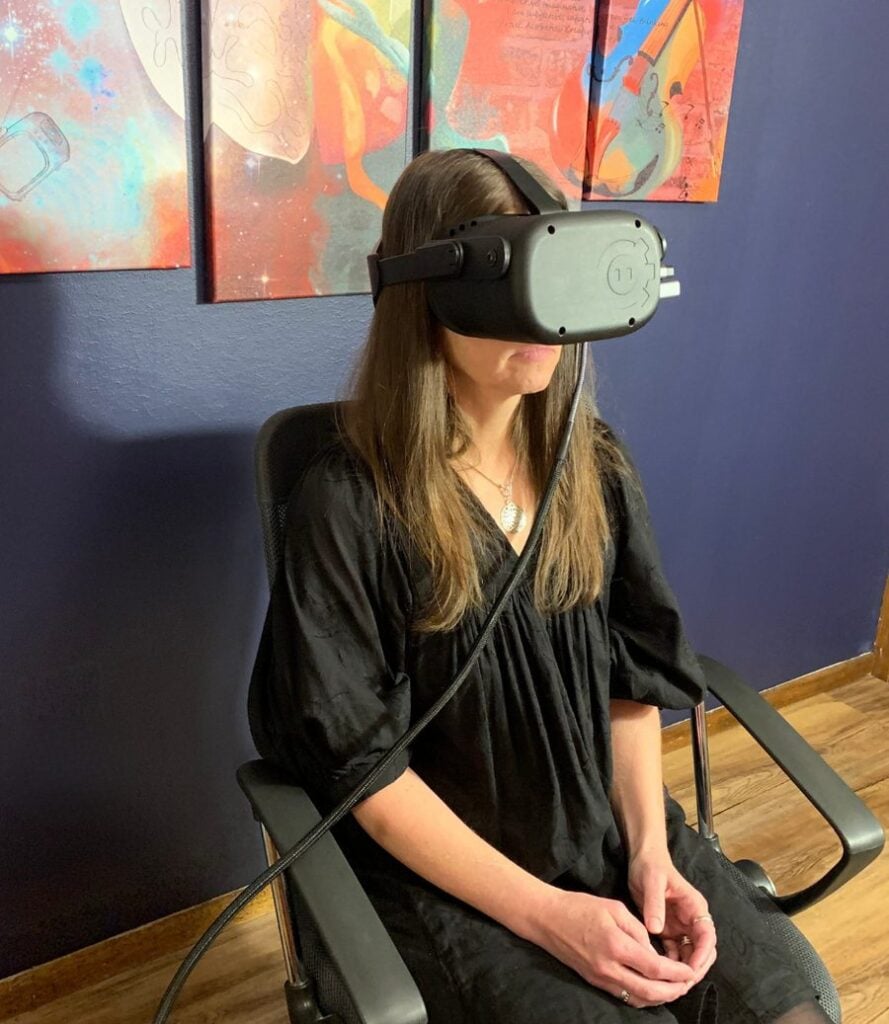
- Eye movement testing (VNG): how your eyes and inner ear are working together, including in complete darkness.
- Balance testing (posturography): how steady you are and how much your brain relies on each system to keep you upright.
- Posture analysis: how much weight you put on each leg, and how twisted your hips and shoulders are. Holding yourself unevenly is constant low-level work for a system that’s already overloaded.
What care looks like
Care is weighted to your results, not a fixed protocol. It’s built on the two parts of The Omega Method:
- Vestibular therapy: exercises for your eyes and balance system, including the Gravity Reset Method, which retrains how your brain senses and responds to gravity so standing up stops being an emergency. Each exercise is tested against your results and dosed to what you can tolerate today. Read more about the Gravity Reset Method
- Upper cervical chiropractic: a precise, gentle correction calculated from your posture measurements, to take the strain off a neck that’s been braced for a fall.
We dose everything carefully. Pushing too hard can trigger a flare, so we build up at the pace your testing supports.
Progress is re-measured along the way, so you see the change in data, not just in how you feel on a given day.
What this looks like in practice
“… I feel so much better now! My brain fog has stopped … my body has way more energy … They also helped me diagnosis a vestibular imbalance and gave me very helpful exercises to improve the severity. …”
Jessica M., Google review
Individual results vary.
Common questions about POTS and dysautonomia
What’s the difference between POTS and dysautonomia?
Dysautonomia is the broad term for the autonomic nervous system not regulating well, which affects heart rate, blood pressure, digestion, temperature, and sleep. POTS (postural orthostatic tachycardia syndrome) is one of the most common patterns within it, defined by a sharp rise in heart rate on standing.
What does the vagus nerve have to do with my symptoms?
The vagus nerve carries the rest-and-recover side of your nervous system. It’s the brake to fight or flight’s accelerator. When your brain believes you’re under threat, it won’t apply that brake, which is why so many dysautonomia symptoms look like a body stuck in high alert.
I’ve tried breathing exercises and cold exposure. Why didn’t they hold?
Those techniques work on the output, asking your nervous system to calm down. They help many people. What they don’t change is the information your brain is using. If the signals about gravity and movement are unreliable, your brain keeps concluding you’re unsafe, so the calming has to be repeated daily just to hold ground.
What does your balance system have to do with my heart rate?
The balance organs in your inner ear connect directly to the circuits that control heart rate and blood vessel tone. That’s how your body starts adjusting your circulation the moment you begin to stand, rather than waiting for blood pressure to drop. When that signal is unreliable, the response can arrive late or overshoot.
Can you help if I’ve had POTS for years?
Many of the people we see have. Long-standing symptoms can still improve, and testing often turns up balance and visual contributors that have never been examined.
Is POTS connected to concussion?
It can be. Many people notice symptoms after a concussion, a viral illness, or another significant stress on the body. If you’ve had a concussion, our concussion page covers how that affects the same systems. (Concussion)
Will the exercises make me feel worse?
Mild, temporary symptoms can happen. That’s why we dose each exercise to your results and build up slowly, because pushing too hard can set off a flare.
Do I need a referral?
No. You can schedule a complimentary consultation directly.
Do you take insurance?
We are out of network with all carriers but can provide you with a superbill to submit for reimbursement.
Not ready to schedule? Start here
Download our guide: Recalibrating Your Brain’s Relationship with Gravity
Why standing up feels like an emergency to your nervous system, and how we retrain the way your brain responds to gravity.
Related conditions
Further reading
Tired of fighting gravity every day? Let’s measure what’s actually going on.