
Sciatica Treatment in Denver
For pain that shoots down your leg, won’t settle down, or flares up the moment you think it’s finally gone.
Serving Denver, Arvada, and Lakewood from Wheat Ridge
The short version
Sciatica keeps flaring when the load on the nerve never changes. At Omega Functional Health in Wheat Ridge, we measure how your weight, hips, and pelvis are positioned, then build care around what’s actually loading the nerve.
Does this sound familiar?
- Pain runs from your low back or buttock down your leg
- Sitting at a desk or in the car is the worst part of your day
- One hip always feels tight, high, or stuck
- You get numbness or tingling in your leg or foot
- It flares every time you try to get back to exercise
- You’ve been told it’s a disc or your piriformis, and you’re still hurting
If you nodded at two or more, you’re who we built this practice for.
Where sciatica often starts
- A disc in the low back: a bulging or herniated disc can irritate the nerve roots that form the sciatic nerve.
- The deep hip muscles (piriformis syndrome): the sciatic nerve runs right next to, and sometimes through, the piriformis muscle. When that muscle is tight or scarred, it can squeeze the nerve.
- The pelvis and hip joints: strain in the joints where your spine meets your pelvis can refer pain down the leg.
- How you stand: if your weight sits more on one side, that side carries extra load all day, every day.
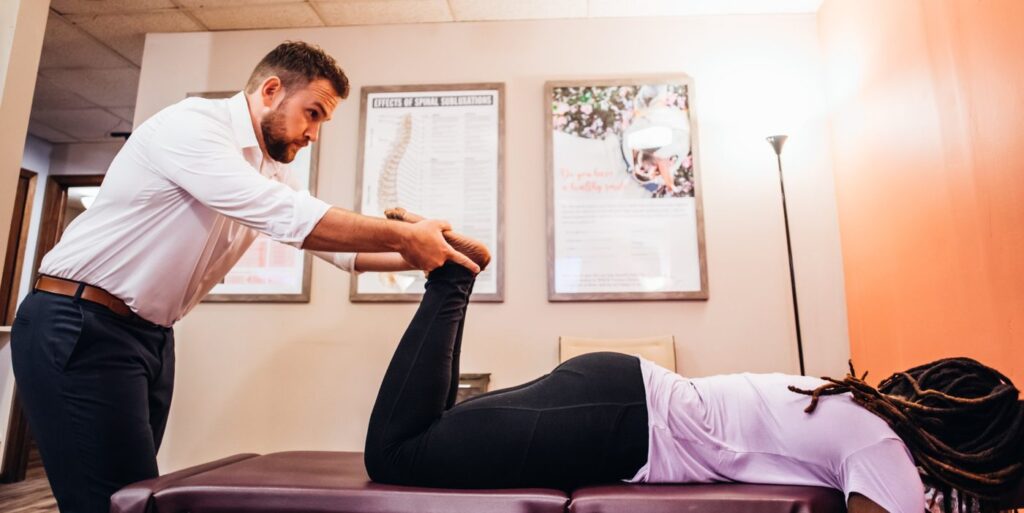
Why sciatica keeps flaring
Your brain’s number one job is keeping you upright. When the information from your eyes, inner ear, and body stops adding up, it braces to protect you, and your whole body follows. A hip rotates. Your weight shifts onto one leg. Your pelvis tilts to keep your eyes level.
With sciatica, the side carrying that extra load is usually the side that hurts. The muscles and joints there work harder with every step and every hour you sit. Over time, they tighten, guard, and build up scar tissue around the nerve’s path. That scar tissue sends its own distorted signal back to your brain, which tells it to keep bracing.
That’s why stretching or treating the sore spot can bring relief that doesn’t last. The load that keeps irritating the nerve hasn’t changed. Measuring that load is where we start.
And a rotated pelvis isn’t a flaw. It’s the compensation your body chose in order to keep you upright, and it will keep choosing it until the reason changes.
What we test
- Posture analysis: how your weight falls on each foot and how far your hips and pelvis are rotated.
- Balance testing: how steady you are and how your body compensates.
- A focused exam of your low back, pelvis, and hip.
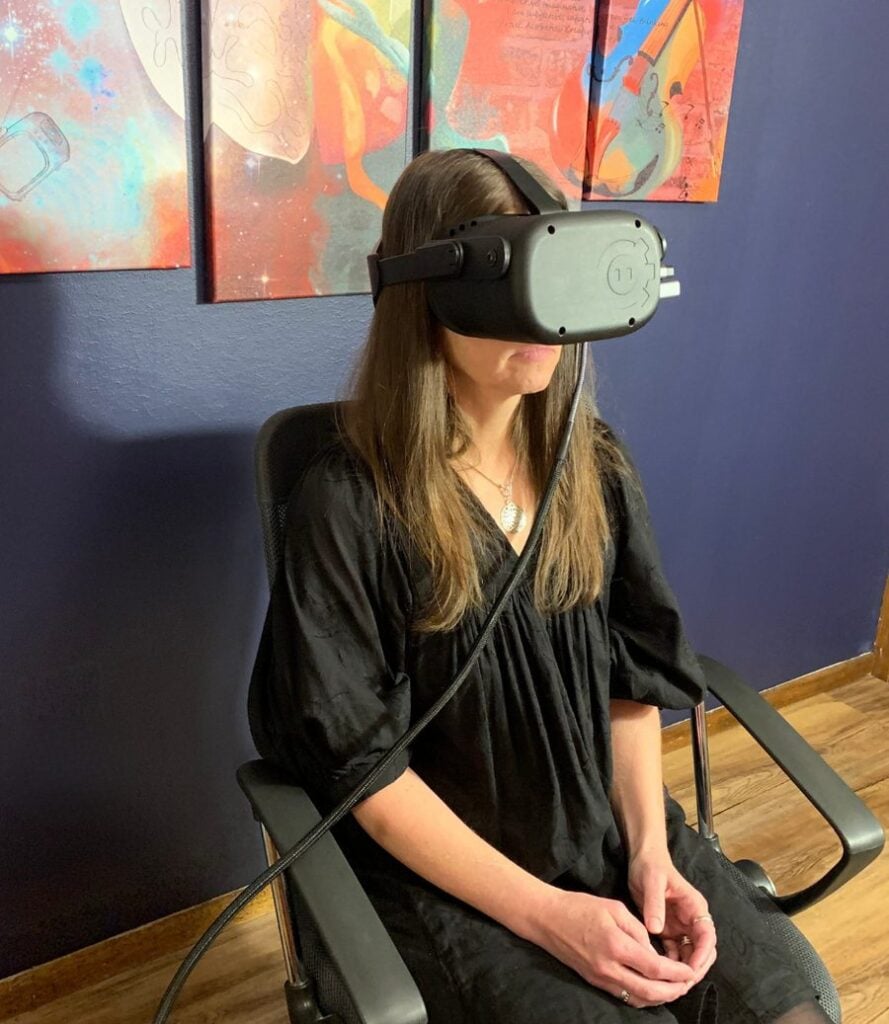
What care looks like
Care is weighted to your results, not a fixed protocol. It’s built on the two parts of The Omega Method:
- Upper cervical chiropractic: your hips aren’t twisted at random. Your body rotated them to keep you upright and your eyes level, and now it’s holding them there. A precise, gentle correction calculated from your measurements changes the signal driving that compensation, so the load can come off the side that’s been carrying it.
- Vestibular therapy: helps your brain hold you upright more evenly, so one side stops carrying the load.
When scar tissue in the deep hip muscles or along the nerve’s path is part of the problem, focused shockwave therapy may be added. Your exam decides.
Progress is re-measured along the way, so you see the change in data, not just in how you feel on a given day.
What this looks like in practice
“What a lovely practice. Had severe sciatica problems and SI joint industry. Struggled for at least 1 1/2 years to find some relief from constant pain. Dr Sam’s machine sorted out the problem with weekly sessions for 12 weeks. Felt relief after the first and second session and the improvement just got better. Definitely would consider seeing for any problems in the future.”
Mary M., Google review
“I am so grateful that I found Dr. Sam. What an amazing and knowledgeable doctor! I started going to him for sciatica and piriformis pain so much so that it made it difficult to ride my horse or even go for walks. Dr Sam used softwave tissue regeneration and within a month I was feeling SO much better. He also used neurofeedback to help me with insomnia and other issues I had. I can’t thank Dr. Sam enough!”
Jan A., Google review
“Wonderful care. Treated for sciatica and am able to move freely again! Did not think this would happen, but Dr. Lynn and Dr. Sam work wonders! So very happy with them.”
S. Larsen, Google review
Individual results vary.
Common questions about sciatica
Can a chiropractor help with sciatica?
Chiropractic care can help many people with sciatica, especially when posture and hip or pelvic strain are loading the nerve. As a chiropractor for sciatica, Dr. Sam measures how your weight and hips are positioned and builds care around those results.
What’s the difference between sciatica and piriformis syndrome?
Sciatica describes pain along the sciatic nerve, from the low back or buttock down the leg. Piriformis syndrome is one cause of it, where the piriformis muscle deep in the hip irritates the nerve. A disc in the low back is another common cause.
Why does sitting make my sciatica worse?
Sitting puts pressure on the discs of the low back and on the muscles around the sciatic nerve. If one hip is already carrying extra load, sitting concentrates that pressure right where the nerve is most irritated.
My MRI shows a disc. Can you still help?
Often, yes. A disc on imaging tells you what’s there, not necessarily what’s driving your pain. Many people have disc findings without symptoms. We measure how your posture and hips are loading the area and work from that.
Will my sciatica go away on its own?
Some flare-ups settle within a few weeks. When sciatica keeps returning, it usually means the load on the nerve hasn’t changed, and that part doesn’t resolve with time alone.
Can sciatica cause numbness or tingling in my foot?
Yes. The sciatic nerve supplies the leg and foot, so irritation anywhere along it can cause numbness, tingling, or weakness. (Numbness & Tingling)
Can shockwave therapy help sciatica?
Focused shockwave therapy can help when scar tissue in the deep hip muscles is part of the problem. It’s one part of care, used when your exam calls for it.
How long until my sciatica gets better?
It depends on your findings and how long you’ve had it. We re-measure early in care, so you and we both know within the first few weeks whether things are improving.
Do you see patients from Arvada and Lakewood?
Yes. Our office is in Wheat Ridge, a short drive from Arvada, Lakewood, Golden, and central Denver.
Do I need a referral?
No. You can schedule a complimentary consultation directly.
Do you take insurance?
We are out of network with all carriers but can provide you with a superbill to submit for reimbursement.
Related conditions
Further reading
Tired of sciatica running your day? Let’s measure what’s actually going on.