
What Is Pediatric Functional Neurology — And Why Denver Families Are Choosing It
Published by Omega Functional Health | Wheat Ridge, Colorado
If your child has struggled with developmental delays, sensory sensitivities, learning challenges, or motor coordination difficulties, you have likely worked through a familiar cycle: pediatrician referrals, specialist evaluations, waiting lists, and recommendations that address symptoms without a clear explanation of why those symptoms exist. For a growing number of Denver-area families, pediatric functional neurology is offering a different entry point into that conversation. Families searching for pediatric functional neurology in Denver are often looking for answers beyond traditional approaches.
This article explains what functional neurology is, how it differs from conventional pediatric neurology, what the assessment process looks like, and what the research says about neuroplasticity-based approaches in children.
Families searching for pediatric functional neurology in Denver are often looking for answers beyond traditional approaches.
What Is Functional Neurology?
Functional neurology is a clinical discipline that focuses on identifying and addressing disruptions in how the nervous system processes and integrates information, rather than exclusively targeting structural pathology. Practitioners trained in functional neurology evaluate the brain and nervous system using detailed neurological examinations and look for patterns of altered function, meaning areas where neural pathways are underperforming relative to what would be expected developmentally or situationally. The field draws on the principle of neuroplasticity, which is the capacity of the brain and nervous system to reorganize itself in response to activity, experience, and targeted input. This is not a theoretical concept. The scientific literature on neuroplasticity is substantial. Research published in Nature Reviews Neuroscience has established that experience-dependent plasticity continues throughout life, with particularly robust windows of responsiveness during childhood and adolescence. Bhaskaran S, Bhide P. Roles of KDM6B and KDM6A in development, differentiation and diseases. Developmental Neurobiology. 2020.How Pediatric Functional Neurology Differs from Conventional Pediatric Neurology
Why Families Are Turning to Pediatric Functional Neurology in Denver Conventional pediatric neurology is primarily oriented toward diagnosing and managing structural, metabolic, or genetic conditions affecting the nervous system, such as epilepsy, cerebral palsy, muscular dystrophies, and neurodegenerative diseases. It is an essential and rigorous specialty, and for those conditions, it is the appropriate clinical framework. Pediatric functional neurology addresses a different category of patient, specifically children who have neurological symptoms or developmental presentations that do not map cleanly to a structural diagnosis. These can include:- Developmental coordination disorder or delays in gross and fine motor milestones
- Sensory processing differences that affect attention, behavior, or social engagement
- Learning and reading challenges not explained by IQ testing alone
- Chronic postural instability or balance difficulties
- Anxiety presentations with a significant autonomic or vestibular component
- Attention and executive function challenges
The Research on Neuroplasticity in Children
The scientific basis for neuroplasticity-driven intervention in children is well-supported across multiple research domains. Studies in developmental neuroscience have consistently demonstrated that the pediatric brain is highly responsive to structured, repetitive sensory and motor input. Research on cerebellar-based interventions in children with developmental coordination disorder has shown measurable improvements in motor performance and academic skills following structured movement-based programs. Studies examining cerebellar stimulation approaches in children with reading difficulties have produced improvements in reading accuracy and phonological processing. Stoodley CJ, Schmahmann JD. Evidence for topographic organization in the cerebellum of motor control versus cognitive and affective processing. Cortex. 2010;46(7):831-844. Research into the vestibular system’s role in development has similarly demonstrated that vestibular processing difficulties in children are associated with a range of developmental outcomes, including attention, reading, and postural control. The vestibular system is one of the earliest to develop in utero and has widespread projections throughout the brainstem, cerebellum, and cortex. Rine RM, Wiener-Vacher S. Evaluation and treatment of vestibular dysfunction in children. NeuroRehabilitation. 2013;32(3):507-518. Functional neurology practitioners use this understanding to design individualized programs that target specific systems based on examination findings, rather than applying a generalized protocol.What Assessment Looks Like at Omega Functional Health
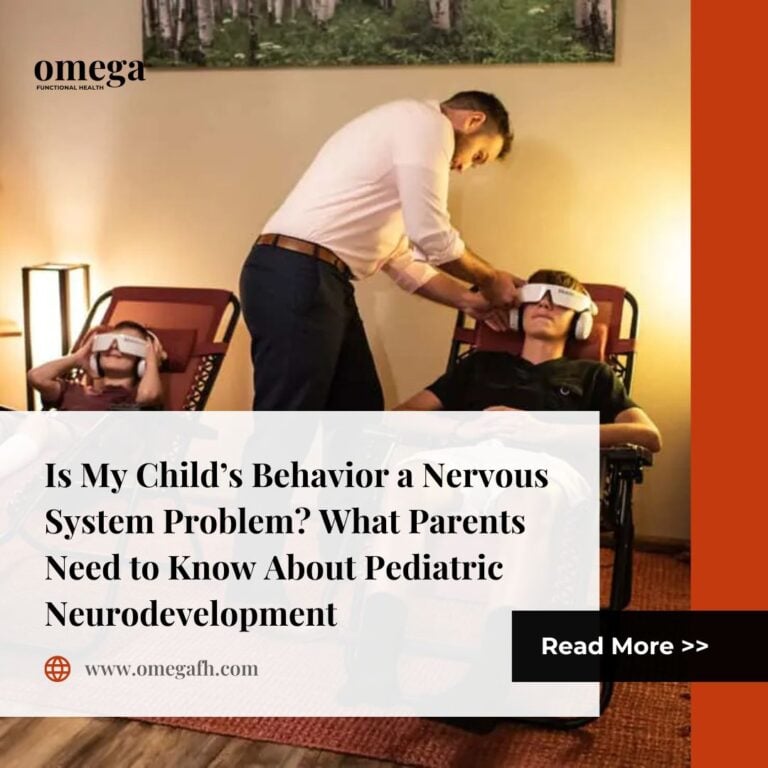
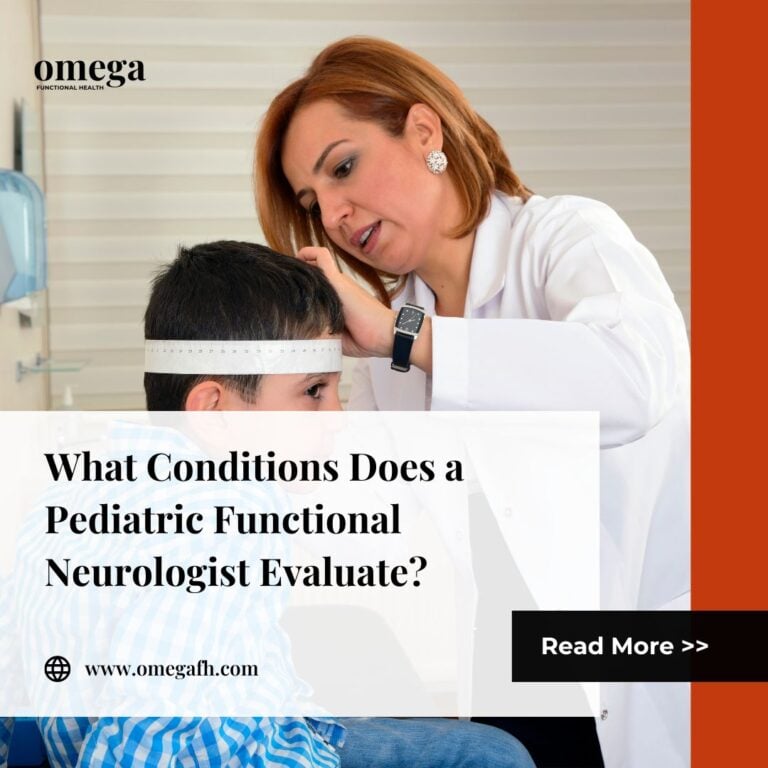
At Omega Functional Health in Wheat Ridge, the pediatric evaluation process begins with a complimentary virtual consultation with parents before a child is ever seen in person. This allows the clinical team to understand the developmental history, prior evaluations, school reports, and family concerns in depth before the initial in-office visit. The in-office evaluation is typically one hour. It includes a comprehensive neurological examination covering:- Oculomotor function and vestibulo-ocular reflex testing
- Cerebellar coordination and motor timing assessments
- Proprioceptive and sensory integration screening
- Postural and gait analysis
- Cortical processing and attention observations
Why Families in the Denver Area Are Seeking This Approach
The Denver metropolitan area has a significant and growing population of families navigating complex pediatric developmental presentations. Many of these families have completed thorough conventional evaluations and received diagnoses that are accurate but do not translate directly into a specific intervention beyond behavioral therapy or medication management. Functional neurology does not compete with those recommendations. It is not an alternative to occupational therapy, speech language pathology, or behavioral intervention. It is a framework for understanding the neurological underpinnings of a child’s presentation and addressing those underpinnings directly, often in parallel with other therapies. Families in the Wheat Ridge, Arvada, Lakewood, and Denver communities interested in learning more about how pediatric functional neurology might be applicable to their child’s situation are welcome to explore the functional neurology services at Omega Functional Health or contact the clinic directly to schedule a complimentary virtual consultation.A Note on What Functional Neurology Is Not
It is worth being direct about what this approach does not claim. Functional neurology is not a cure for autism spectrum disorder, ADHD, or genetic conditions. It does not promise that a child will achieve any specific developmental milestone. The research on neuroplasticity supports the idea that targeted, consistent, examination-guided intervention can improve the function of underperforming neural pathways. It does not support the idea that any intervention reverses the underlying biology of a diagnosed condition. Families should approach any clinical program, functional neurology included, with appropriate skepticism about specific outcome claims and with a preference for providers who are transparent about what the evidence does and does not support. At Omega Functional Health, the clinical team is committed to communicating clearly about examination findings, the rationale behind each component of a child’s program, and what realistic progress looks like over a 90-day timeline.Getting Started
If your child has a history of developmental concerns, sensory differences, motor challenges, or learning difficulties, and you are looking for a neurologically-focused evaluation that goes beyond what a standard pediatric workup includes, contact Omega Functional Health to begin with a complimentary virtual consultation. The initial conversation is with the parents, at no cost, and is designed to help the clinical team understand whether this approach is likely to be a good fit before any in-office time is scheduled.Learn more about how we help kids with focus, coordination, and sensory challenges on our Melillo Method page.